
Blog · Dental guide
British Teeth: Is the Stereotype True? What the Data Says (Plus Famous British Smiles) Where the joke came from, what a BMJ study actually measured, how NHS orthodontics works, and what a Turkish clinic would tell a British patient.
The short answer
The idea that the British have worse teeth than Americans is a joke with a long history, not a finding. The best-known comparison, a BMJ study published in December 2015, found that English adults had slightly fewer missing teeth than American adults, 6.97 against 7.31 on average, and smaller gaps between rich and poor.[1] The catch is that the study counted missing teeth. It did not measure how straight or white anyone's teeth look, so it cannot settle the question of appearance.
What can be said about looks is more modest. Many British people do leave minor crowding or gaps untreated, partly because NHS braces are mainly for under-18s with a clear clinical need and adults usually pay.[3] Whether that makes British teeth "bad" depends on what you think perfect teeth should look like.
Below we trace the stereotype from The Simpsons to Austin Powers, go through the numbers, explain how NHS orthodontics and dental access work, meet some famous British smiles, and look honestly at why so many Brits now travel to Turkey for dental work. The article is reviewed by an orthodontist, and we have kept to what published sources support.
What do British people's teeth actually look like?
There is no single answer, because there is no single British mouth. The population is large and varied, and the only national measurements we have are about health, such as decay, missing teeth and gum disease, not about how teeth look. If someone tells you what the typical British smile looks like, they are describing an impression, not a statistic.
What does seem fair to say is that a smile in Britain is more likely to look natural than polished. Dental-industry commentary often puts this down to a cultural preference for natural-looking teeth. We could not find a rigorous study behind that idea, so treat it as opinion rather than established fact.
What counts as 'perfect teeth'? Straight and white versus healthy
Perfect teeth is a cosmetic idea, and it varies by country and by decade. A smile can be perfectly straight and bright and still sit on gum disease. A smile with a small gap or a slightly crooked canine can be completely healthy. Orthodontists tend to separate the two questions: is the bite working and are the gums healthy, and separately, is the person happy with how their teeth look?
How a typical British person's teeth compare
In health terms, the comparison with the United States comes out better than the joke suggests, as the data section below shows. In appearance terms, nobody has measured it properly. Be wary of any article, including a flattering one, that claims otherwise.
What are average British teeth like?
Average figures exist only for things that can be counted. The BMJ study used the Adult Dental Health Survey 2009 and found English adults aged 25 and over were missing about seven teeth on average.[1]
Where does the 'bad British teeth' stereotype come from?
The BMJ authors note that there is a longstanding belief in the United States that the British have terrible teeth, and they say it dates back at least a century, kept alive by toothpaste adverts and popular culture.[1] That is the closest thing to an authoritative history we have, and it does not blame any particular cause in Britain itself.
What stereotypical British teeth are supposed to look like
The cartoon version is crooked, overlapping, stained or missing teeth, usually on a character who is otherwise respectable. It works as a joke because it is a contrast with the polished, straightened, whitened look associated with American advertising and Hollywood.[1]
History of the British teeth stereotype
A well-documented early example is The Simpsons. In the episode Last Exit to Springfield, which first aired on 11 March 1993, a dentist scares young Ralph with The Big Book of British Smiles, a volume of crooked and missing teeth that includes the Queen's Guard and Prince Charles.[2][5] The Austin Powers films came afterwards, in 1997, and the BMJ paper names the character and his repugnant smile as part of the pop-culture picture.[1] Because the cartoon gag came about four years earlier, Austin Powers did not start the joke, although it gave it a global audience. A People's History of the NHS entry also describes the film series as having fostered the stereotype.[6]
You will often read that post-war rationing, sugar, the early NHS or slow fluoridation explain it. These explanations are often suggested, but we found no reliable source showing any of them, so we do not treat them as established.
Are British people's teeth really worse? The data
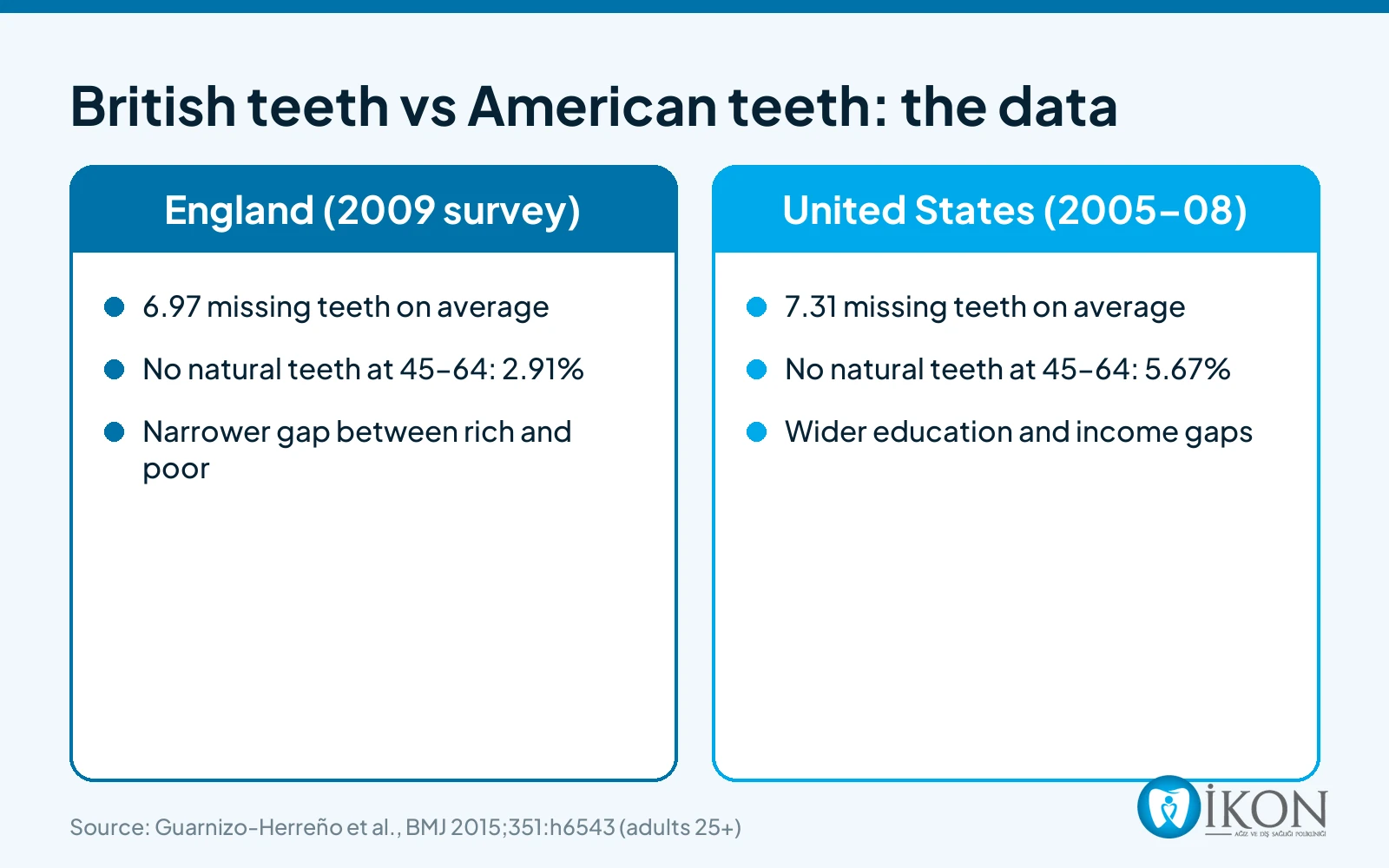
The study most often cited is a Christmas-issue paper in the BMJ with a deliberately playful title, Austin Powers bites back. The authors, led by Carol Guarnizo-Herreño, compared the Adult Dental Health Survey 2009 for England with the US national survey NHANES 2005 to 2008, looking at adults aged 25 and over.[1]
The results ran against the stereotype. English adults had 6.97 missing teeth on average, against 7.31 in the US, a small but statistically significant difference. Among people aged 45 to 64, 2.91% of English adults had no natural teeth, against 5.67% in the US. Among over-65s the two countries looked similar, with 23.55% in England and 22.02% in the US, a difference that was not significant. Self-rated oral health below good was almost identical, at about 31% in both.[1]
The gap between rich and poor was wider in the US. For example, the slope index of inequality in self-rated oral health by education was 42.55 in the US against 18.43 in England.[1] The authors suggested that England's largely NHS-provided dentistry and its safety-net policies, set against insurance-led care in the US, may help explain this, and also mentioned differences in how often wisdom teeth are extracted.
British teeth vs American teeth: what the study did not measure
This matters, and it is the part most summaries leave out. The authors say plainly that the surveys did not include any aesthetic or orthodontic outcomes.[1] The study shows that tooth loss is not worse in England. It says nothing about alignment, whitening or how a smile looks. Anyone who uses it to claim that British teeth are better looking is stretching it as far as the people who use the stereotype to claim the opposite.
It is also dated. The English survey is from 2009 and the American one from 2005 to 2008, so it describes an earlier generation of adults.
The state of teeth in the UK: access, regions and the NHS dentist shortage
If looks are hard to measure, access is easier. NHS Business Services Authority figures for England in 2025/26 show that 18.8 million adults, 40% of the adult population, were seen by an NHS dentist in the 24 months to 31 March 2026. For children, 7.17 million were seen in the 12 months to that date, which is 60%.[7]
The Royal College of Surgeons read the same data differently: it calculated that 28.2 million adults, about three in five, were not seen.[8] Both statements are true, and together they describe the situation that people call the NHS dentist shortage.
UK teeth: regional differences and access
The College's professor Martyn Cobourne said it was encouraging that more people were accessing care, but that access depends largely on where people live.[8] A person's postcode can matter as much as their own habits, which is one reason national averages hide a lot.
Older figures need care. A 2022 City A.M. report said that nine in ten NHS dental practices were not accepting new adult patients, but that figure is several years old and should not be read as the current position.[9]
NHS orthodontics: who qualifies and why waits are long
NHS orthodontics exists to treat teeth that affect health or daily life, not to give everyone a straighter smile. According to the NHS, braces are usually only available for free for people under 18 who have a problem with their teeth. Eligibility depends on how the teeth affect everyday life, and an orthodontist decides. Adults usually have to pay.[3]
In practice, assessment uses the Index of Orthodontic Treatment Need (IOTN). NHS England referral guidance describes grades 4 and 5 as the threshold for under-18s, with grade 3 judged case by case in some areas such as Scotland. Adults with a significant jaw discrepancy can sometimes be treated in hospital, using a different index. These details vary between regions, so check with your own dentist.
Can adults get braces on the NHS?
Rarely, and usually only for a significant jaw problem treated in hospital. Most adults who want braces or aligners pay privately, which for many people is the real reason mild crowding stays untreated.
Why don't more British people get braces?
We found no study that answers this directly. What can be said is that free treatment is limited to under-18s with higher need, that mild crowding does not qualify, and that private treatment costs money. Add the cultural preference mentioned earlier and you have a plausible, but unproven, picture.
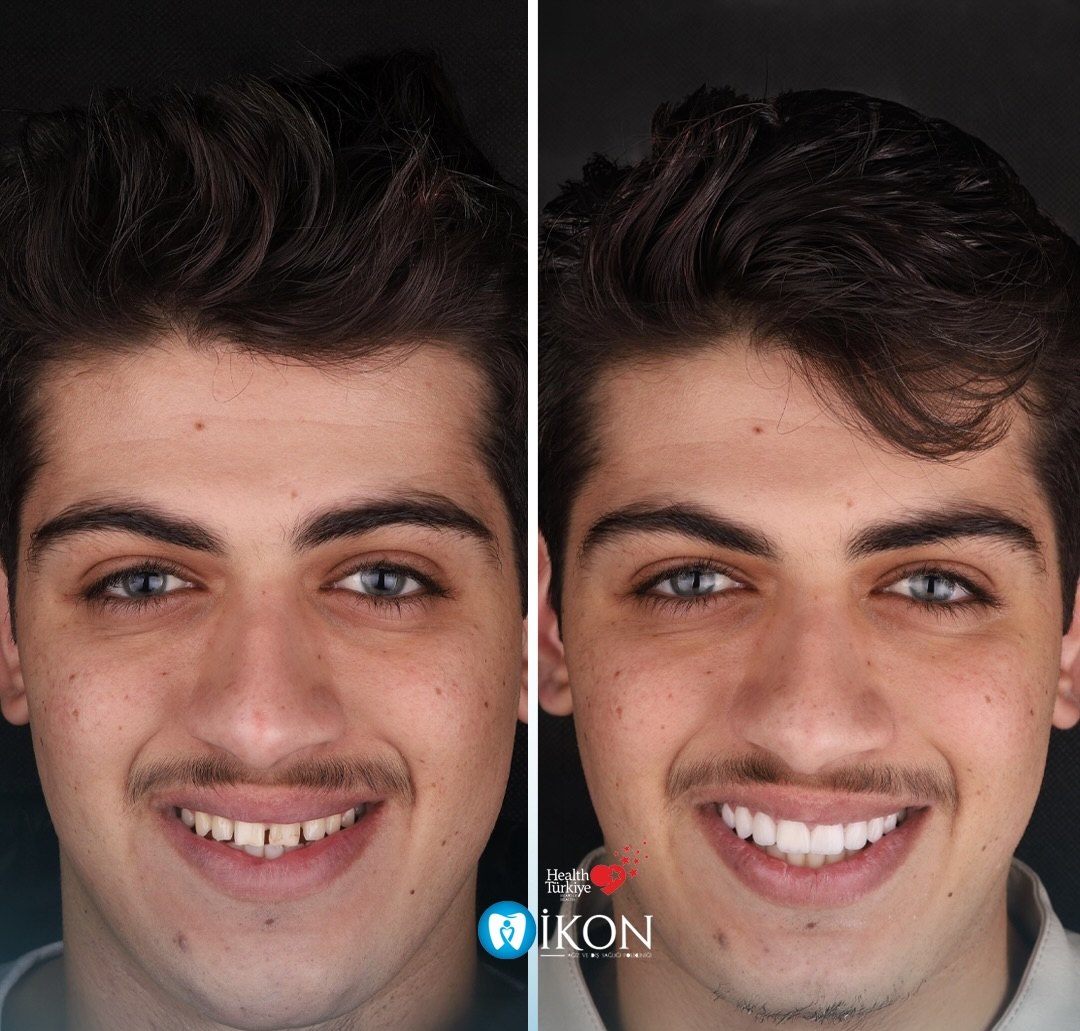
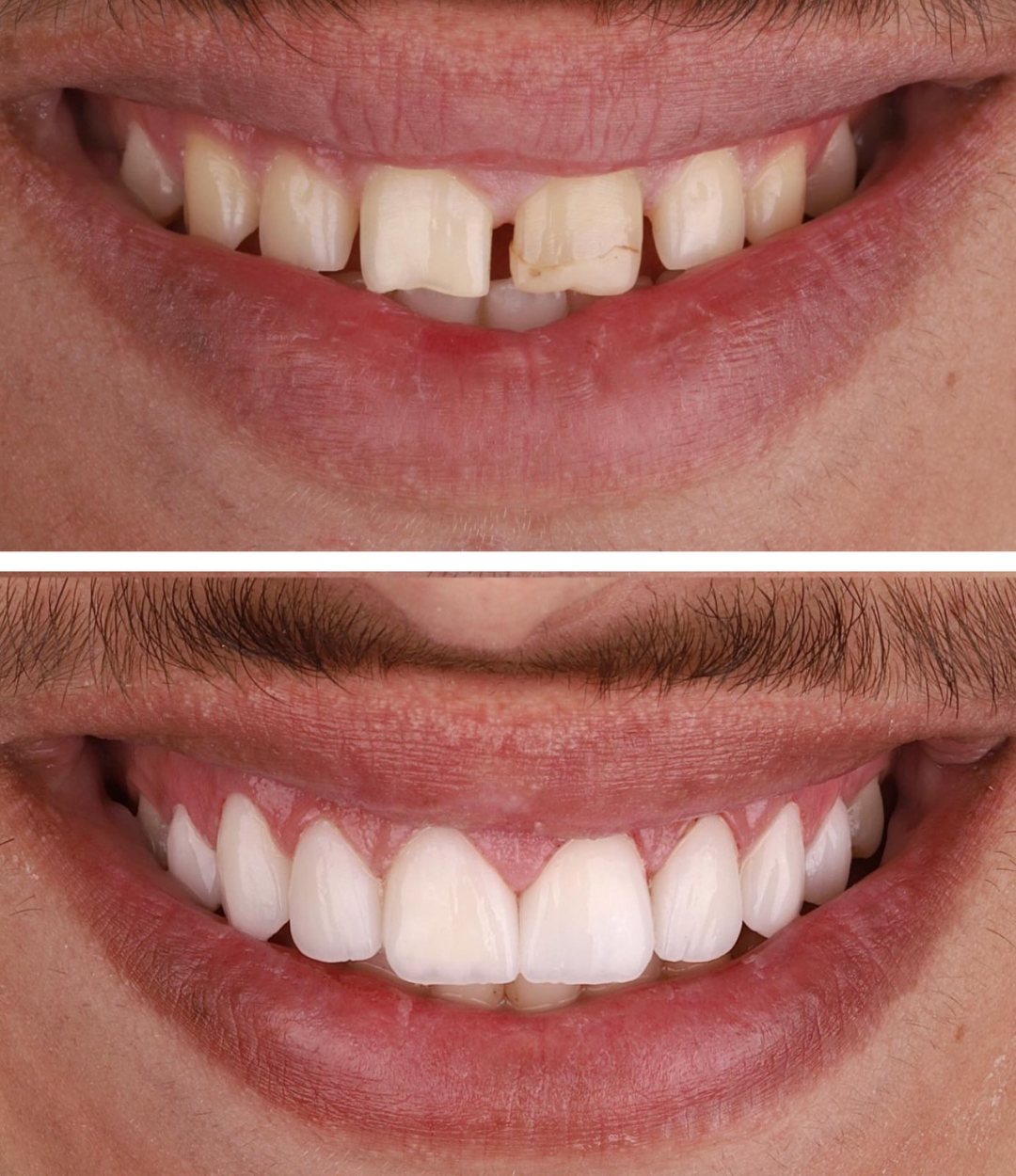
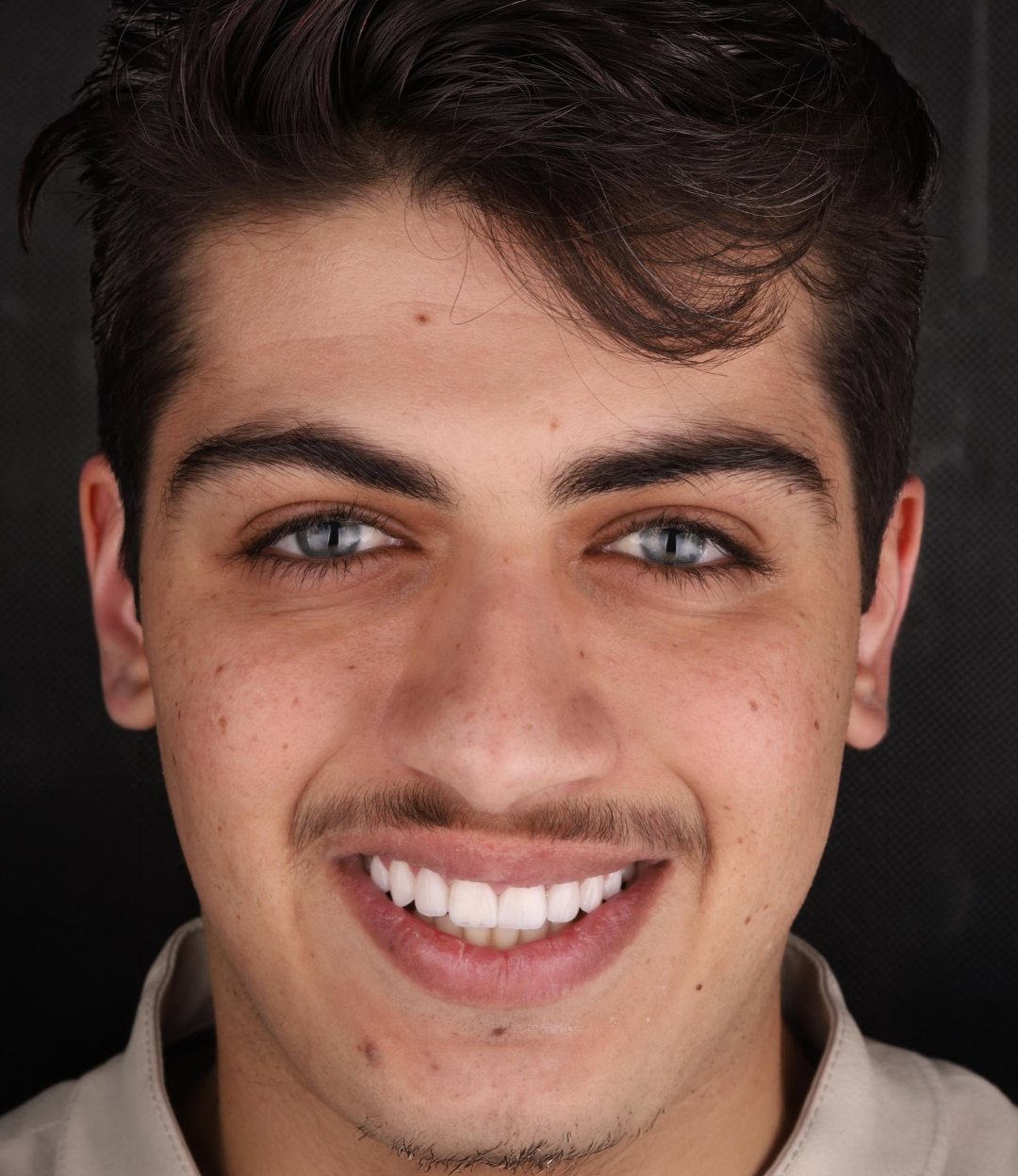
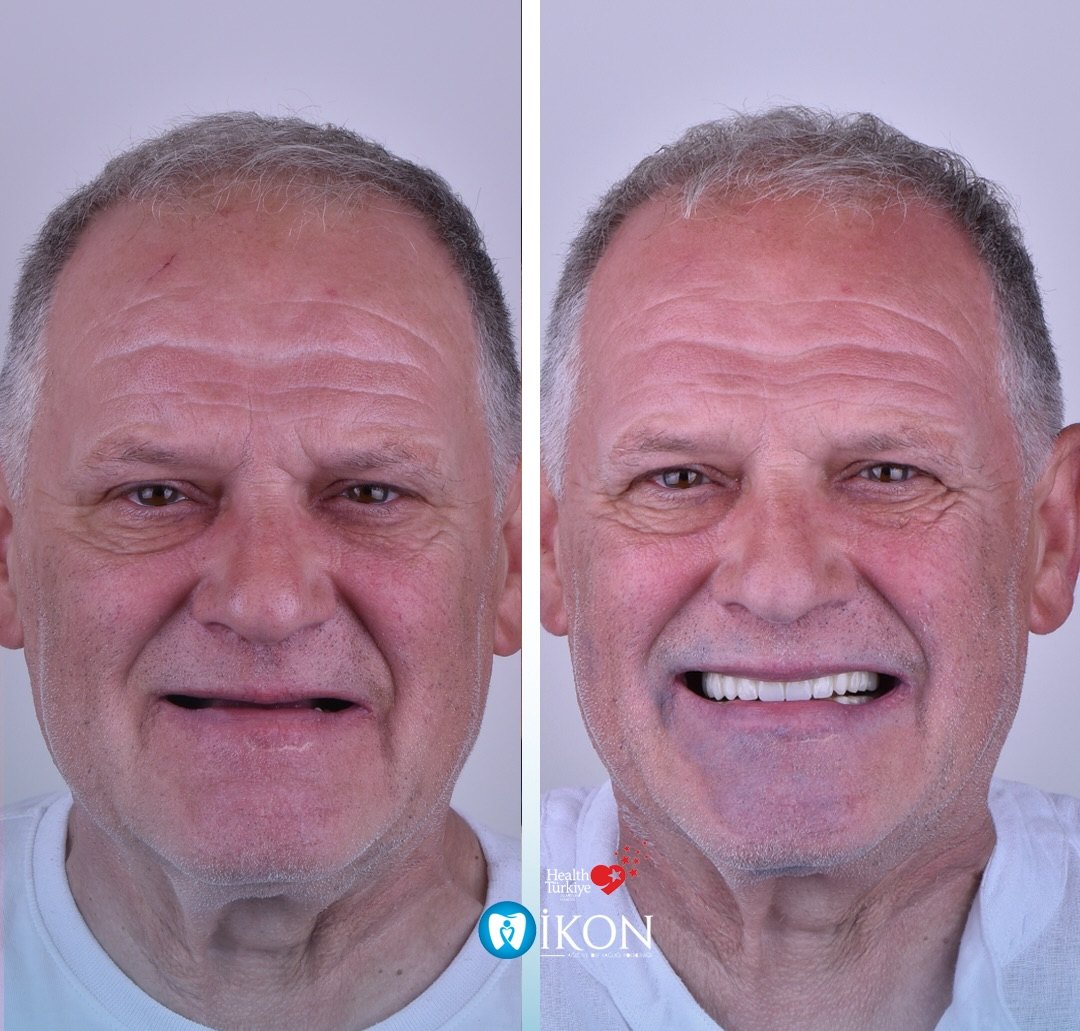
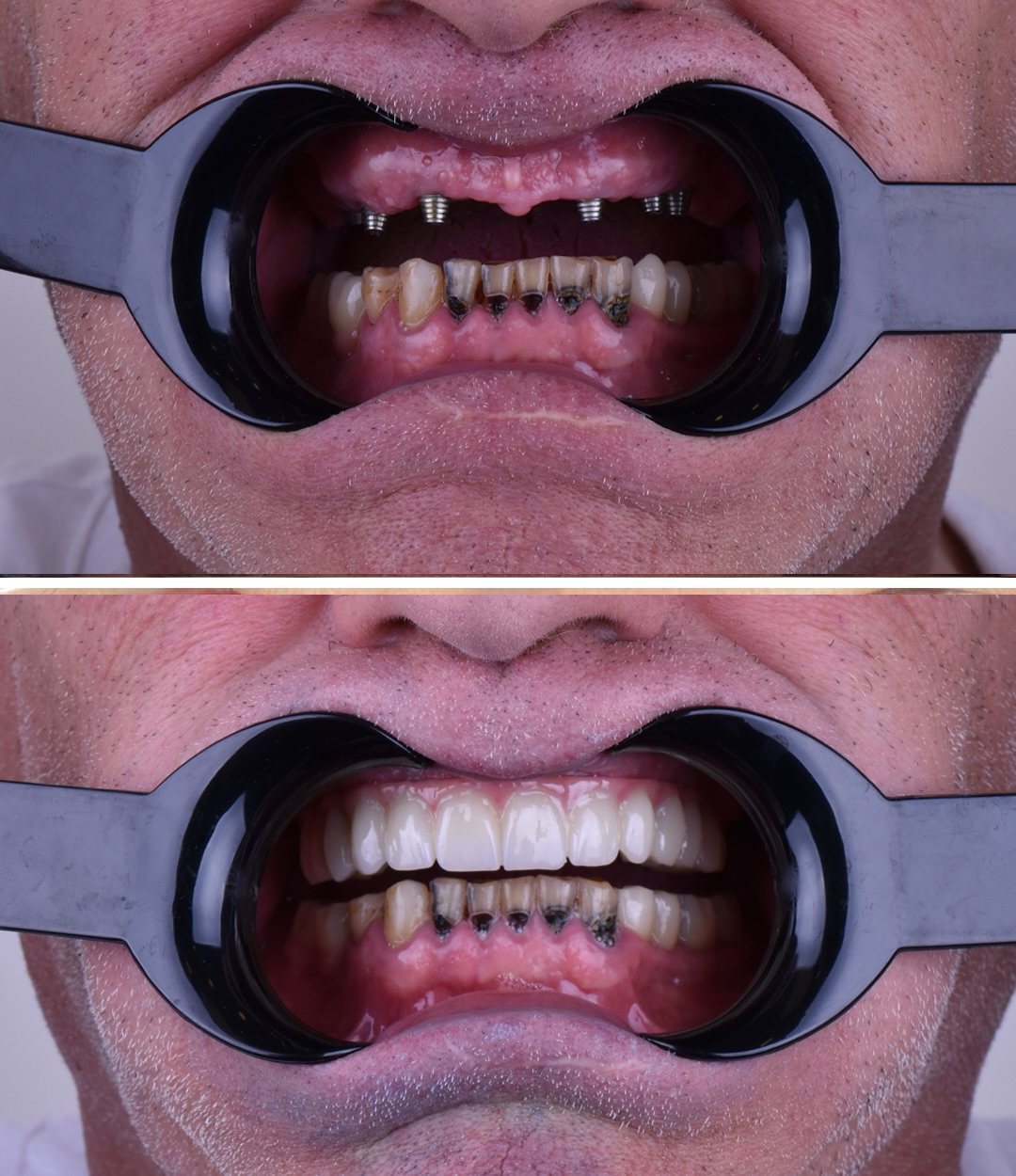
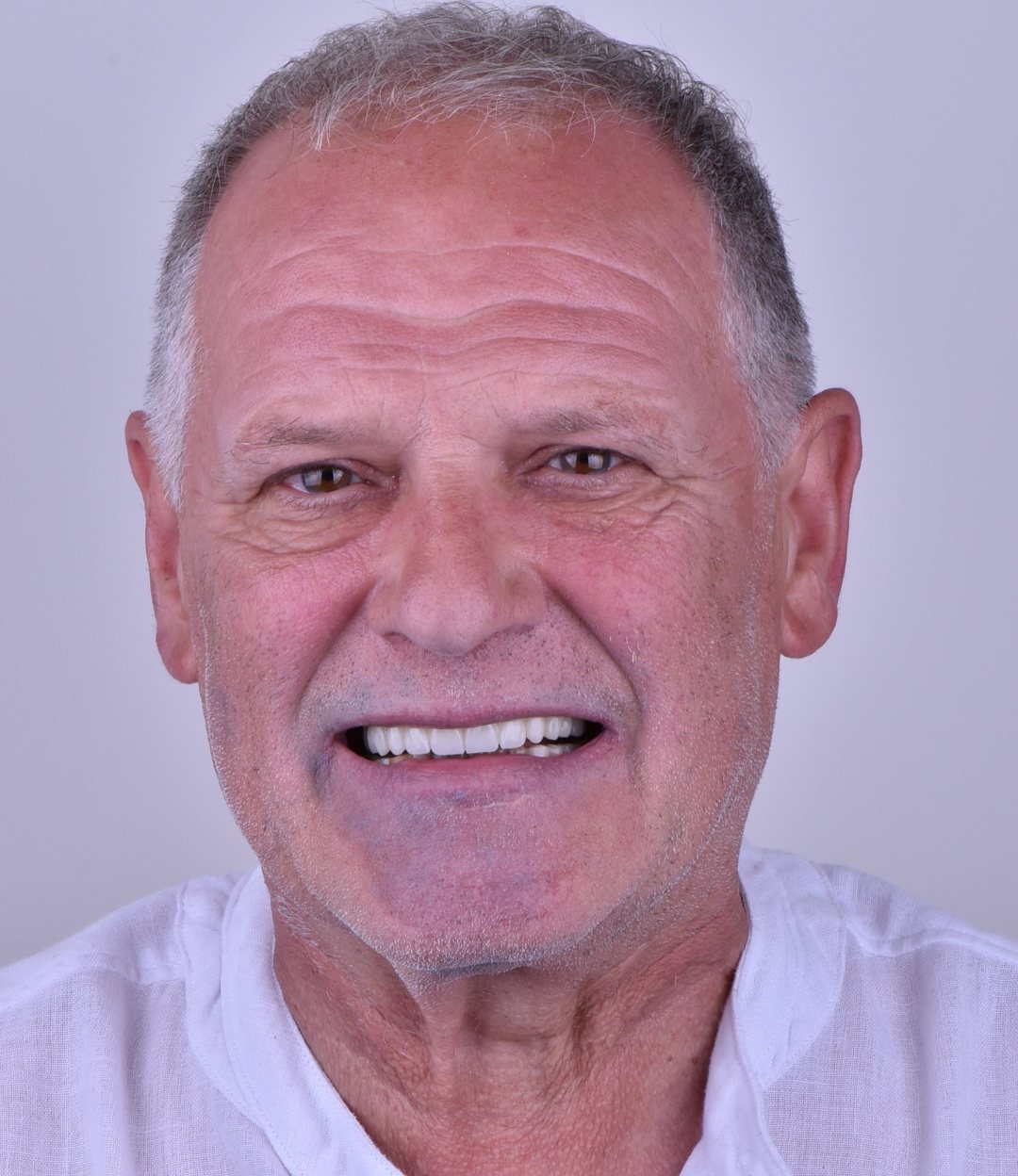
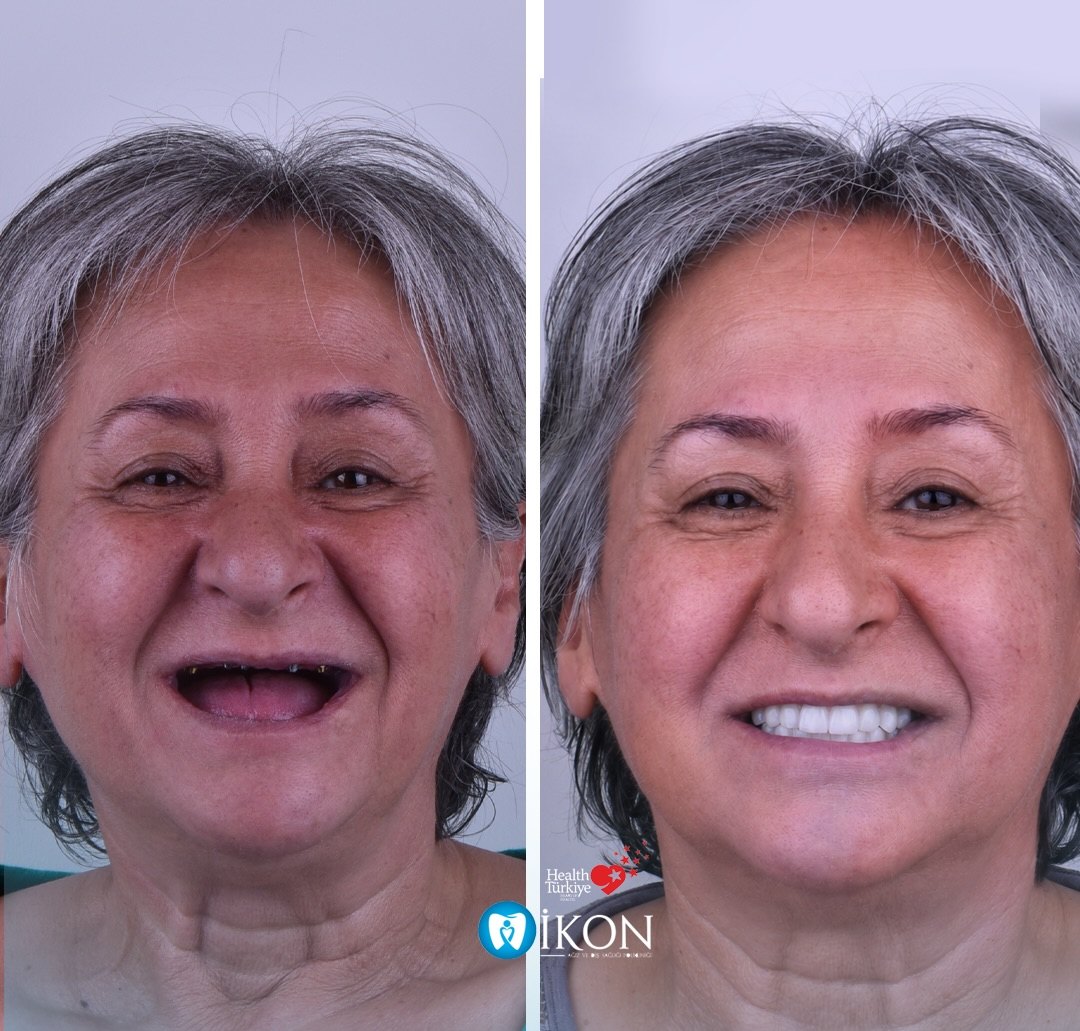
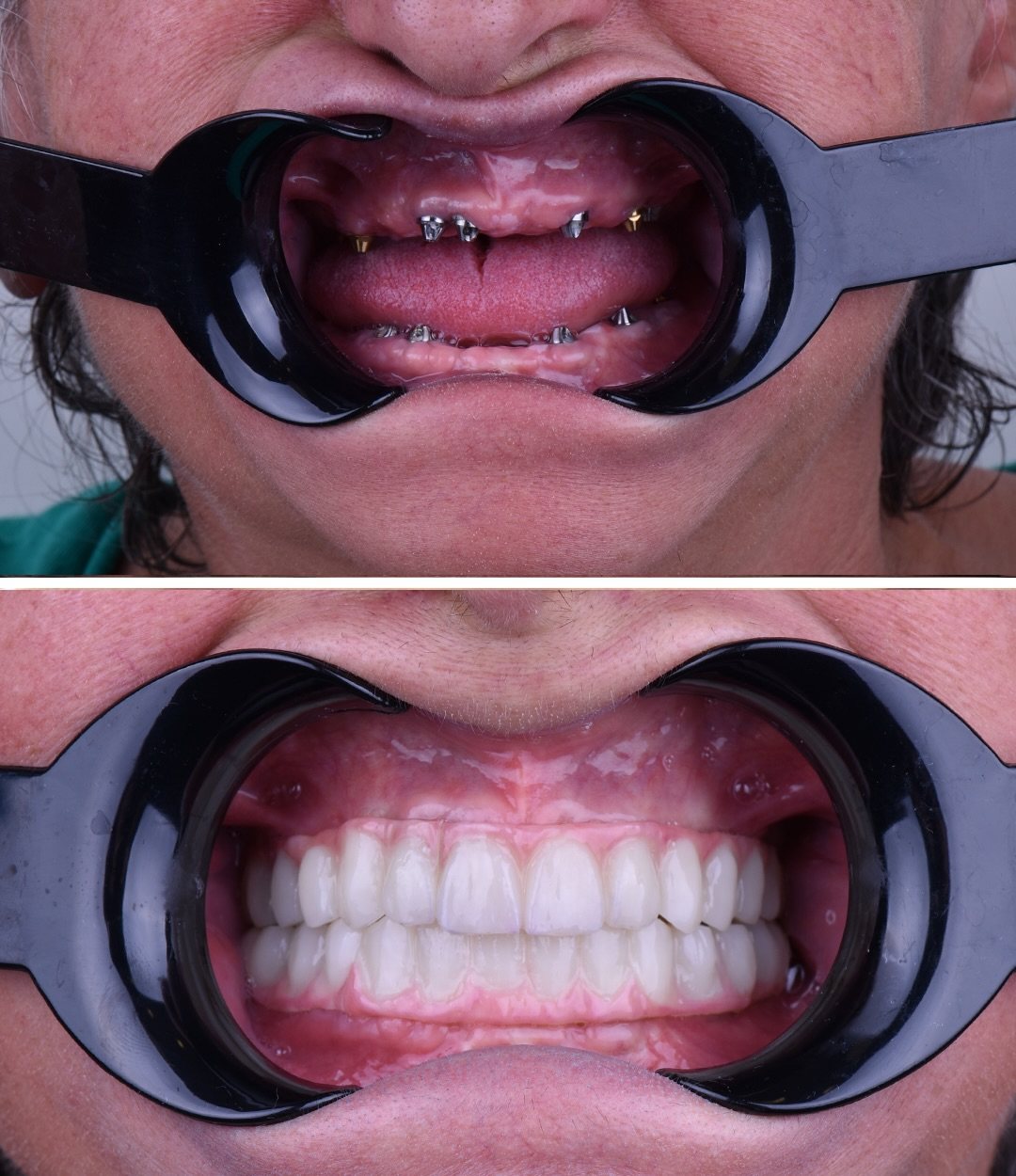
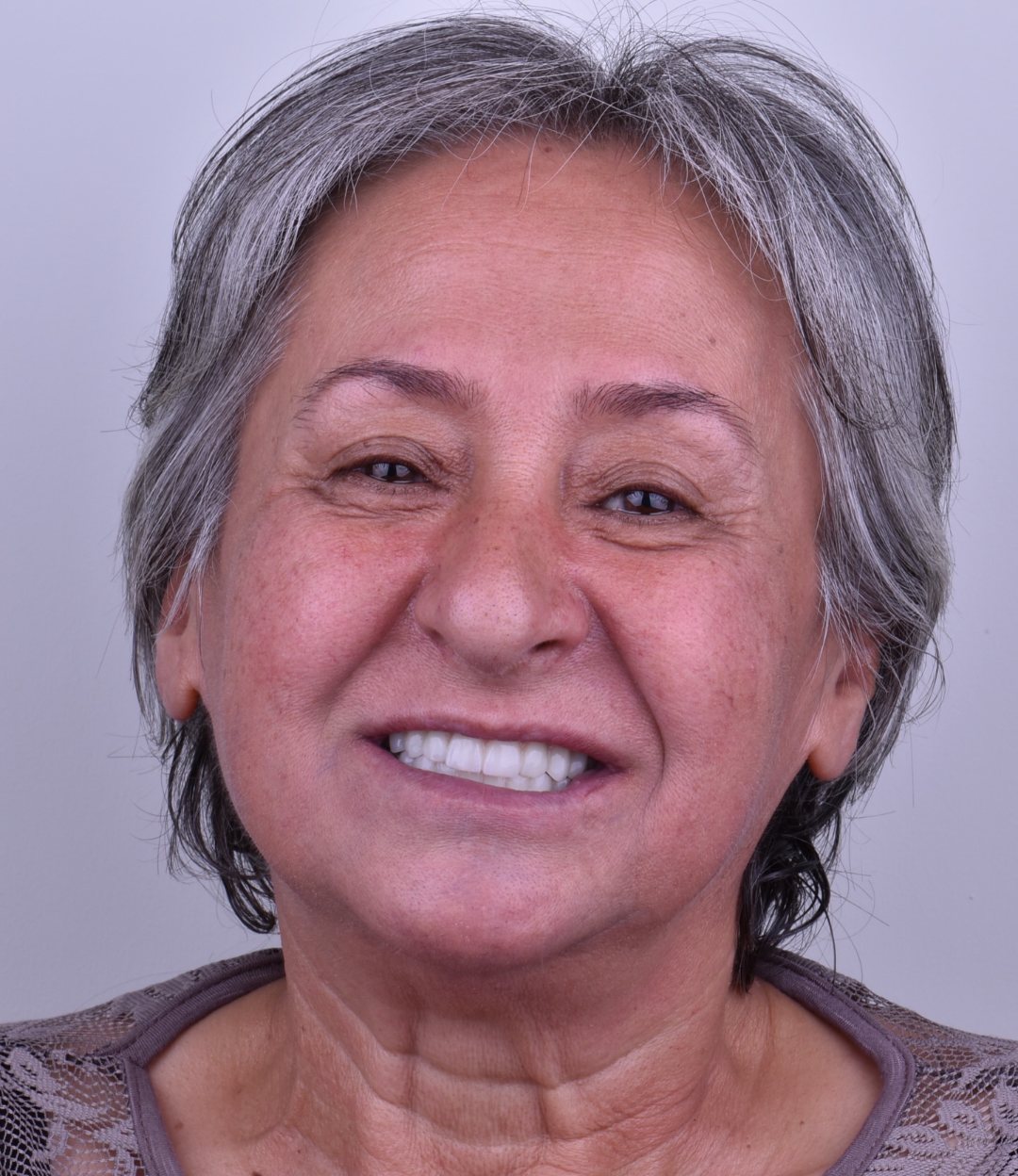
Real smile results from our clinic
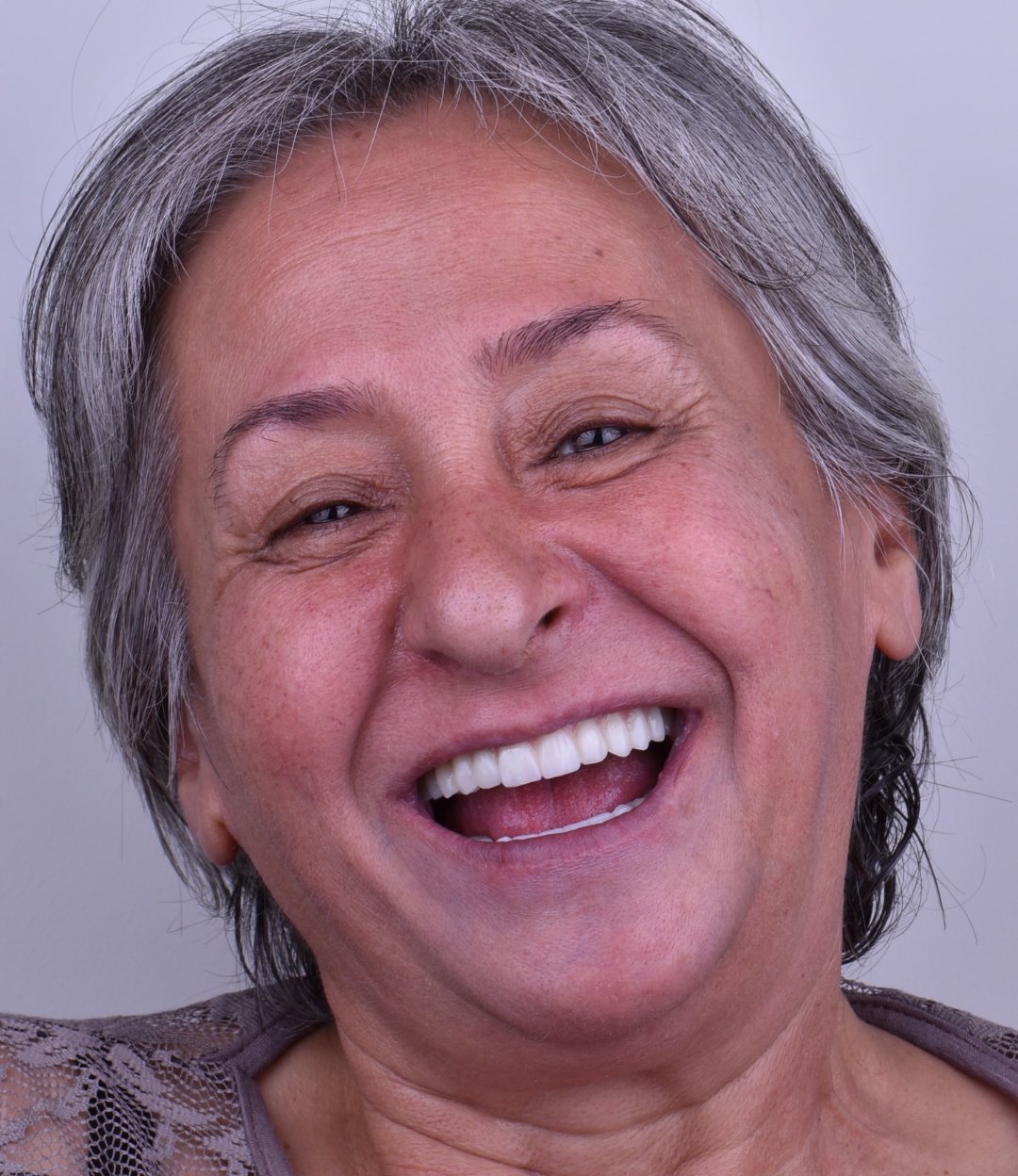
These are patients treated at our clinics in Istanbul, not celebrities.
Real patients, not celebritiesSmile design at İkon Dental: before and after
Patients treated at our clinics in Istanbul. Tap a photo to enlarge it.
Famous British smiles (1): the royal family's teeth
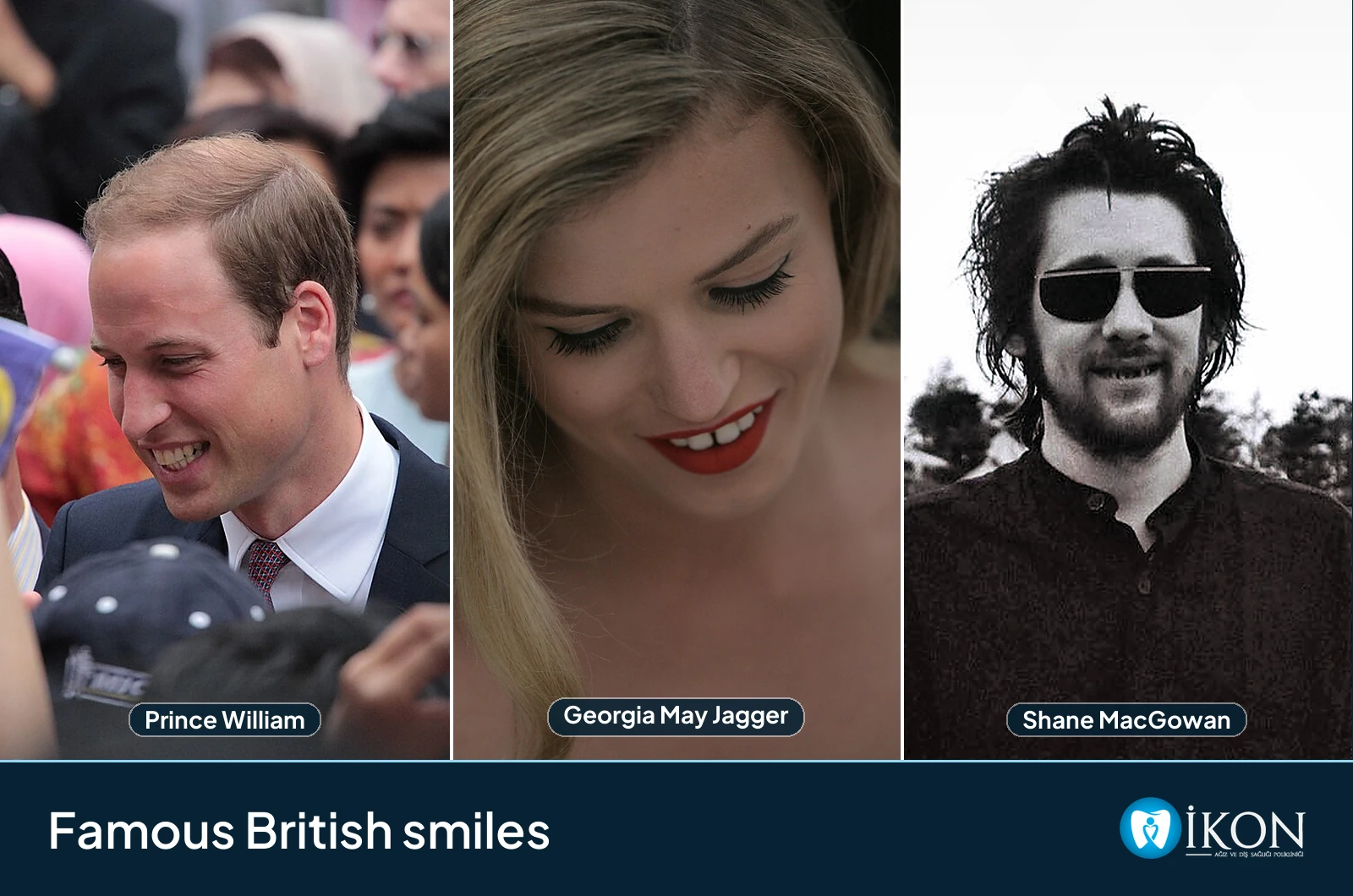
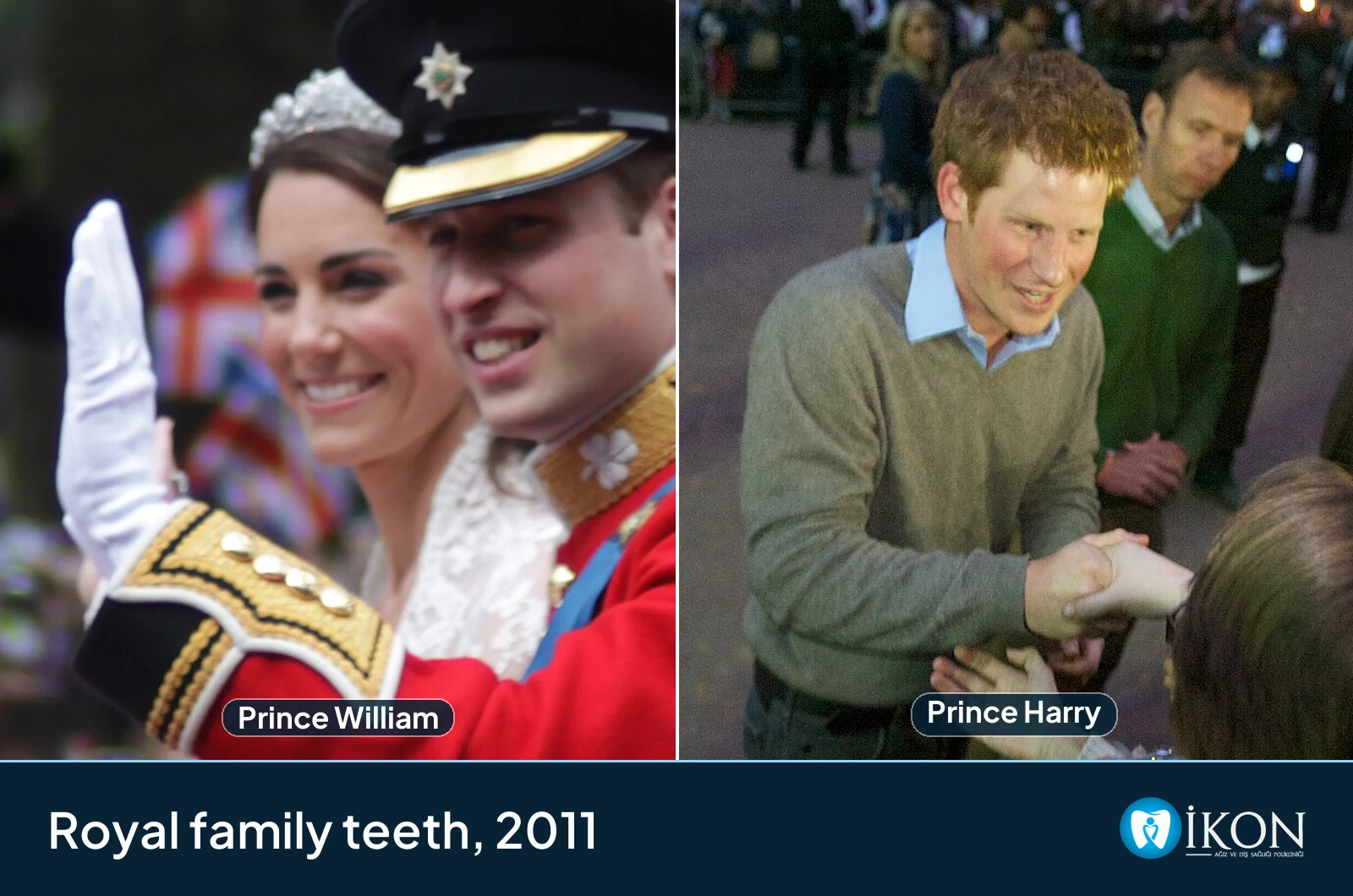
Royal teeth have been discussed for decades, and two cases are reasonably documented. Neither is a scandal. Both are ordinary orthodontic stories played out in public.
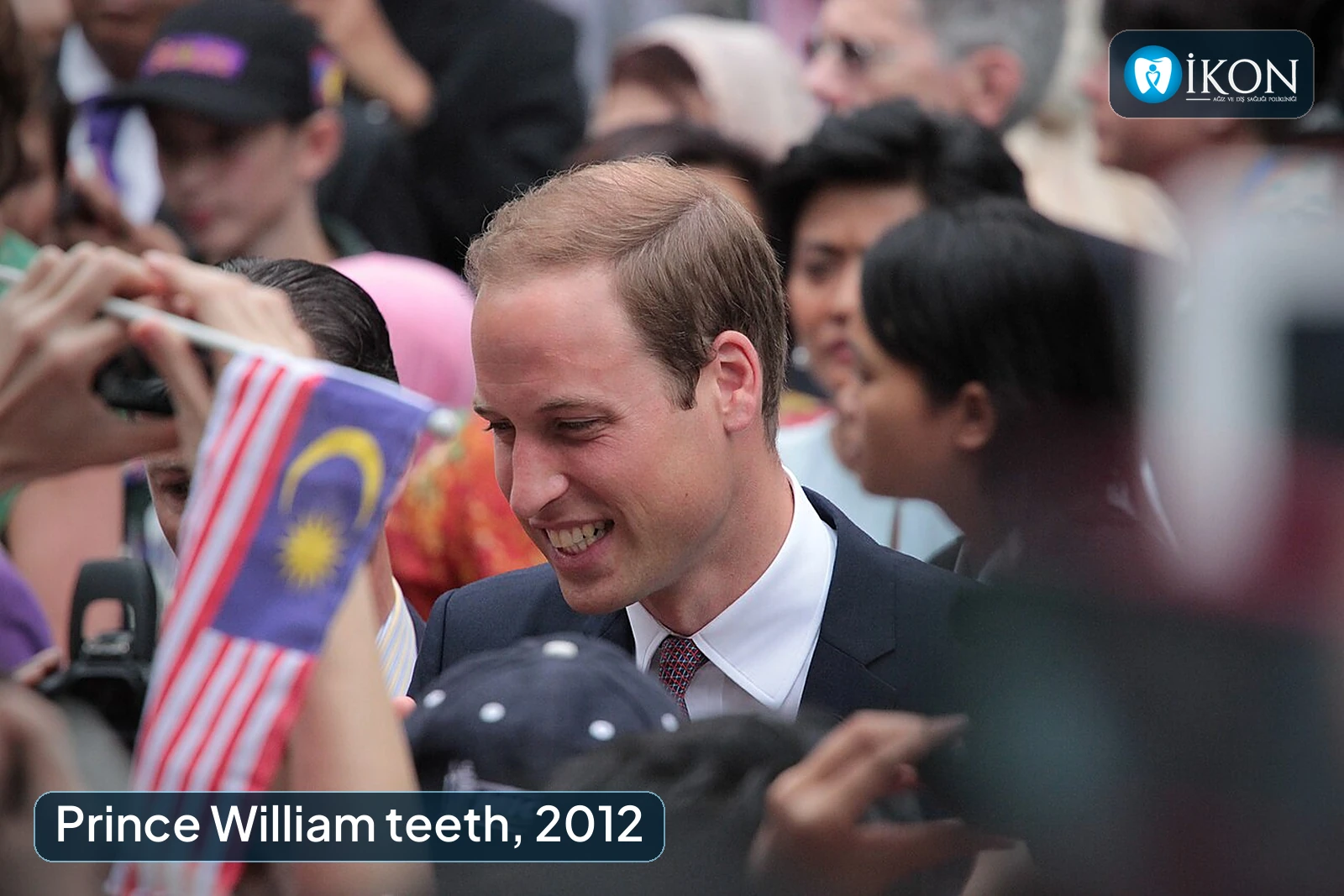
Prince William's teeth
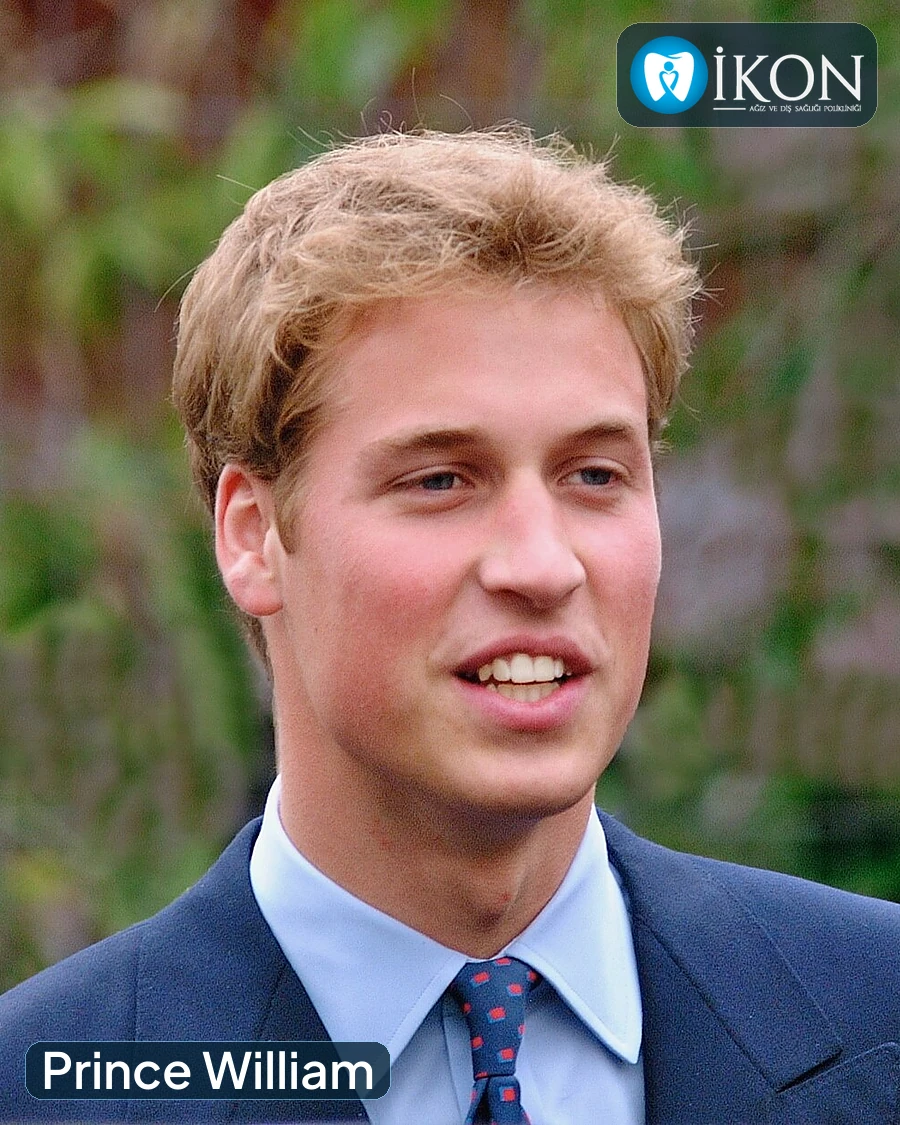
In April 2009, a St James's Palace spokesman said that Prince William had worn a permanent wire support behind his lower teeth for about ten years, after braces came off when he was 16. The statement was reported by several outlets at the time, citing the Daily Express. The device was described as a wire support, which is consistent with a fixed retainer, but the wording does not say so precisely. It is a good example of how teeth are normally kept straight after braces.
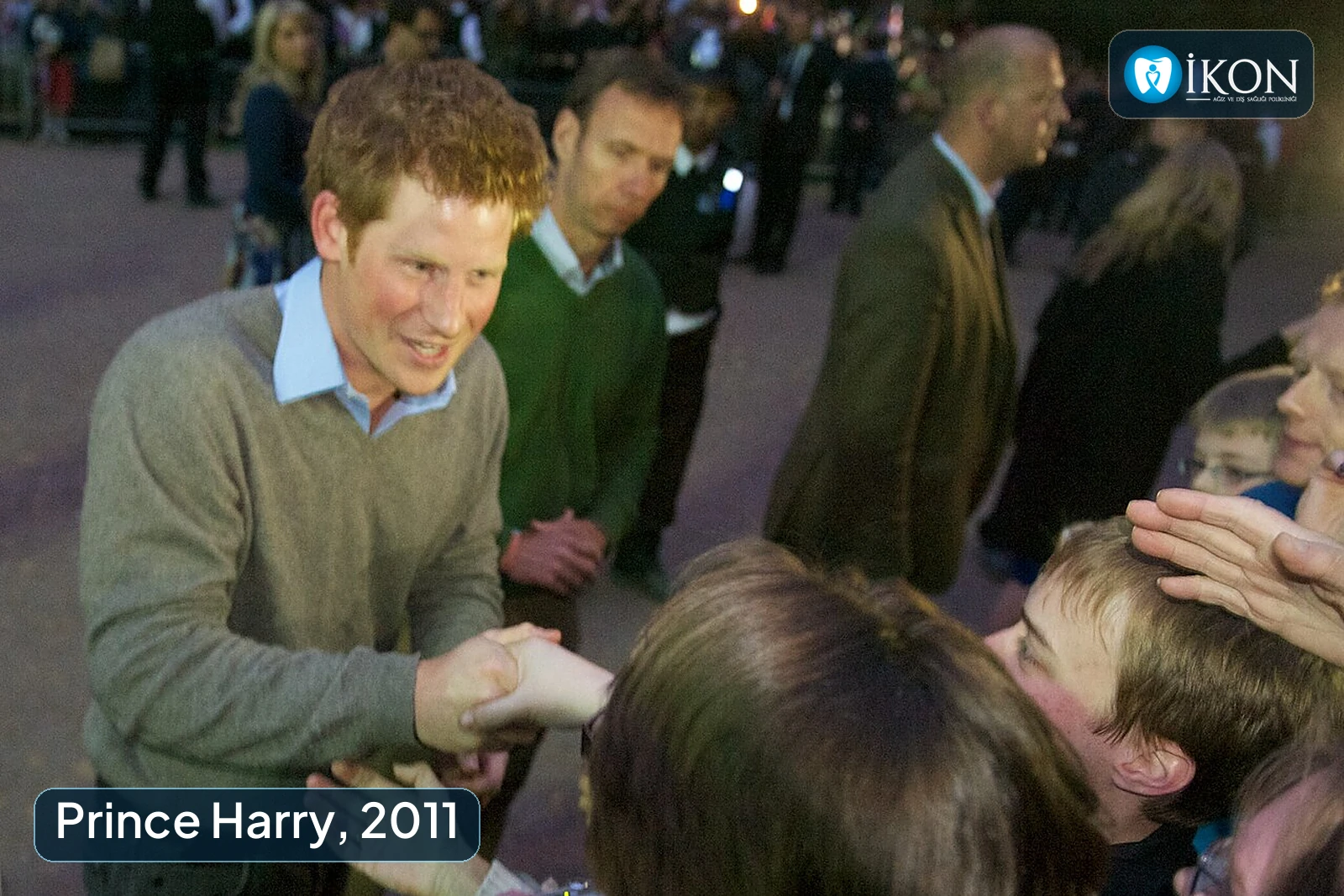
Prince Harry's teeth
Prince Harry was photographed wearing braces as a teenager on Christmas Day 1999, when he was about 15. Hello! and People reported the picture, although the accounts differ on whether it was taken on a walkabout or outside a church at Sandringham.
Royal family teeth, in short
These two accounts suggest the royals did what many British teenagers do when a dentist recommends it. We found no reliable sourced information about dental work by other members of the family, so we say nothing about it. Names do circulate online in lists of celebrity teeth, but without reliable sources, and we have left those out.
Famous British smiles (2): Freddie Mercury and Shane MacGowan
Two British musicians show opposite sides of the same subject: one who reportedly kept his teeth as they were, and one who had them rebuilt.
Freddie Mercury's teeth
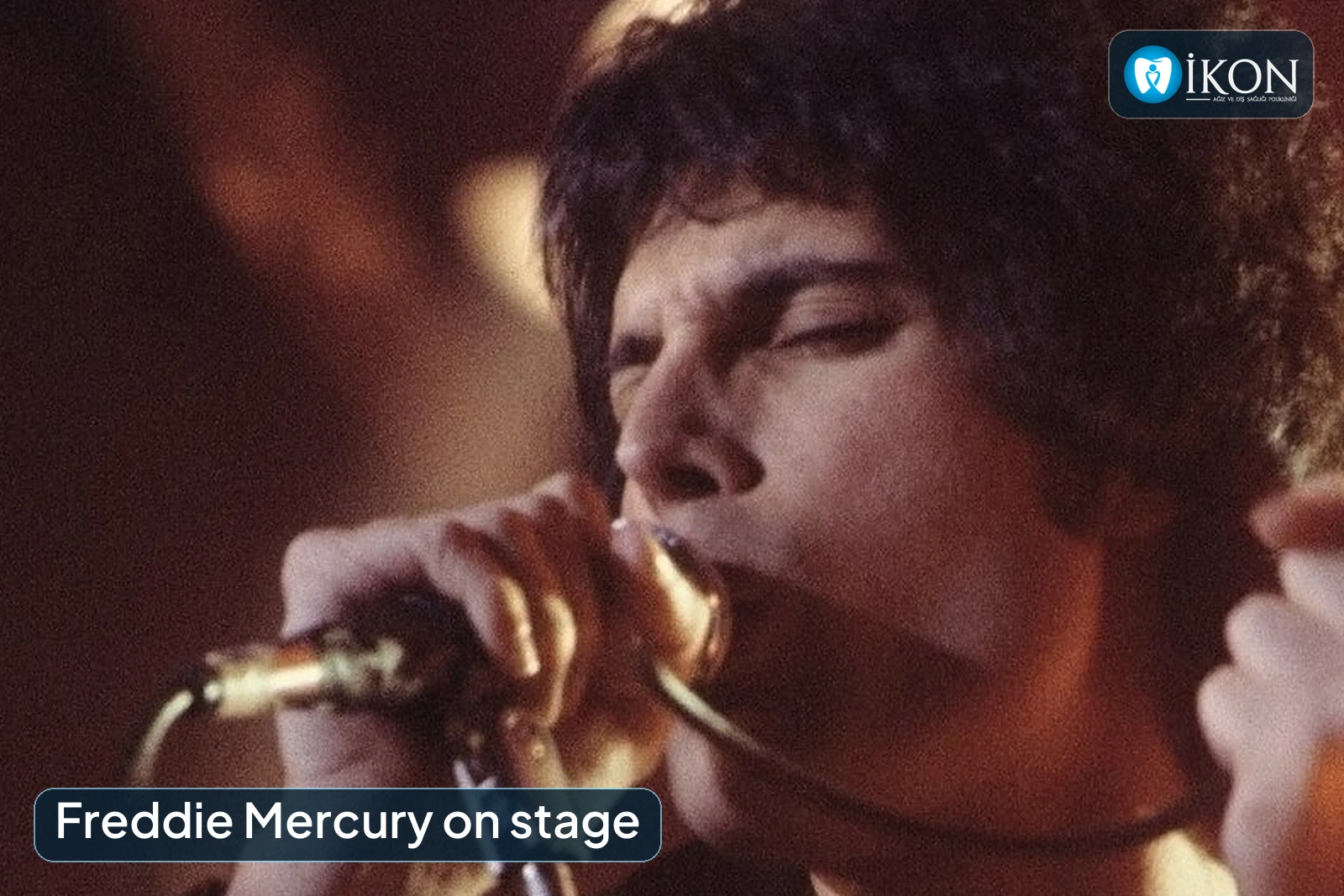
Freddie Mercury is reported to have had four extra incisors and an overbite, and to have been self-conscious about his teeth. The strongest attribution we found comes from people who knew him, Peter Freestone and Rudi Dolezal, as relayed in a 2018 Ultimate Classic Rock article. Dolezal is said to have recalled that Mercury feared treatment would change his voice. This account has not been confirmed by a primary biography, so we say reportedly. It is an understandable concern for a singer, but there is no published evidence about what orthodontic treatment would actually have done to his voice.
Shane MacGowan's teeth
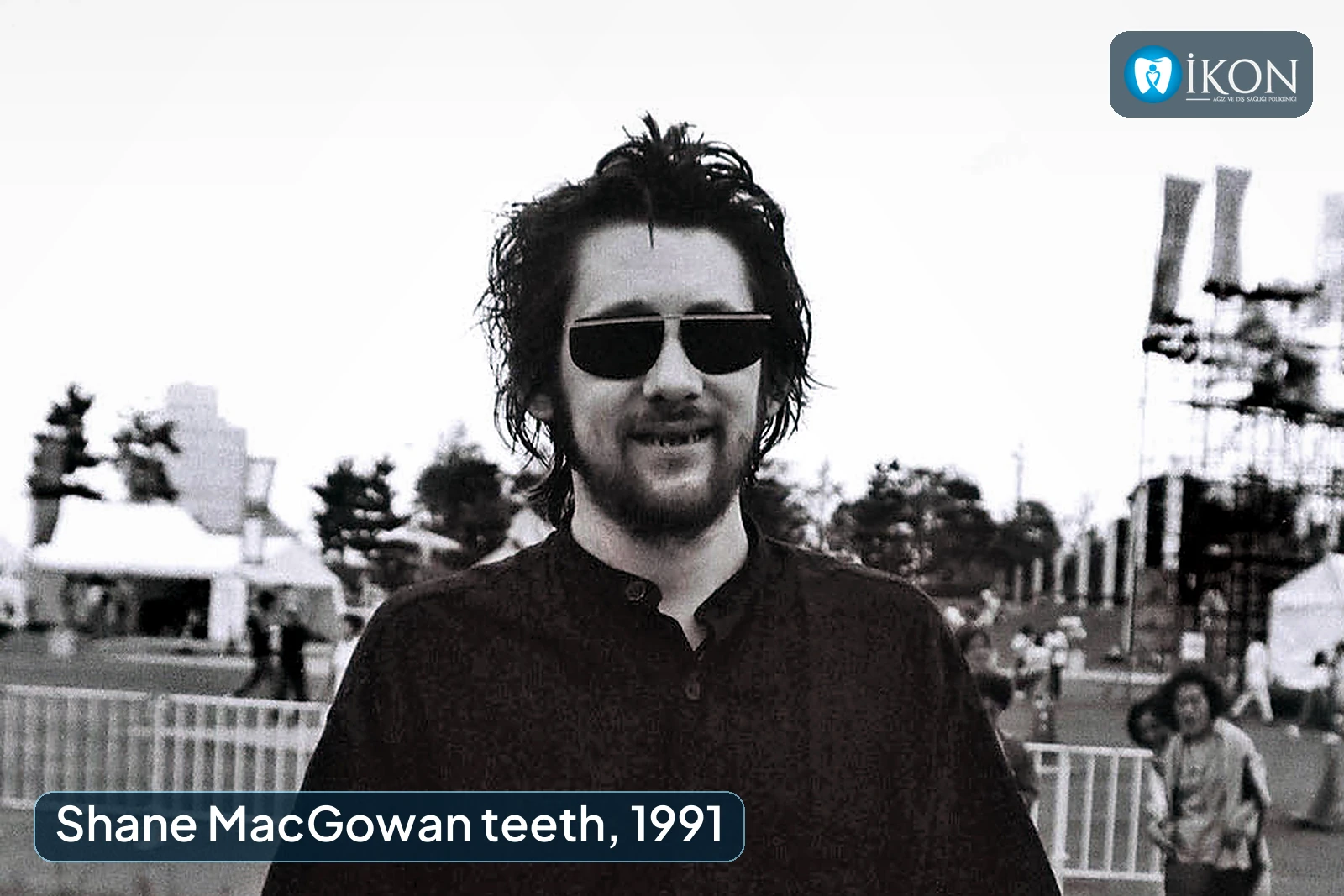
Shane MacGowan, the Pogues singer, is the best-documented dental rebuild in this article. In the Sky Arts documentary Shane MacGowan: A Wreck Reborn, broadcast in December 2015, he had a nine-hour procedure in which 28 teeth were fixed to a titanium plate. The surgeon was Dr Darragh Mulrooney, as reported by the Irish Post.[10] It is a reminder that full-arch work exists for people who have lost most of their teeth, and that it is a very different matter from straightening a few.
Famous British smiles (3): keeping a gap or a natural smile
Not every British celebrity wants a uniform smile, and a few have been open about choosing not to change theirs.
Georgia May Jagger's gap
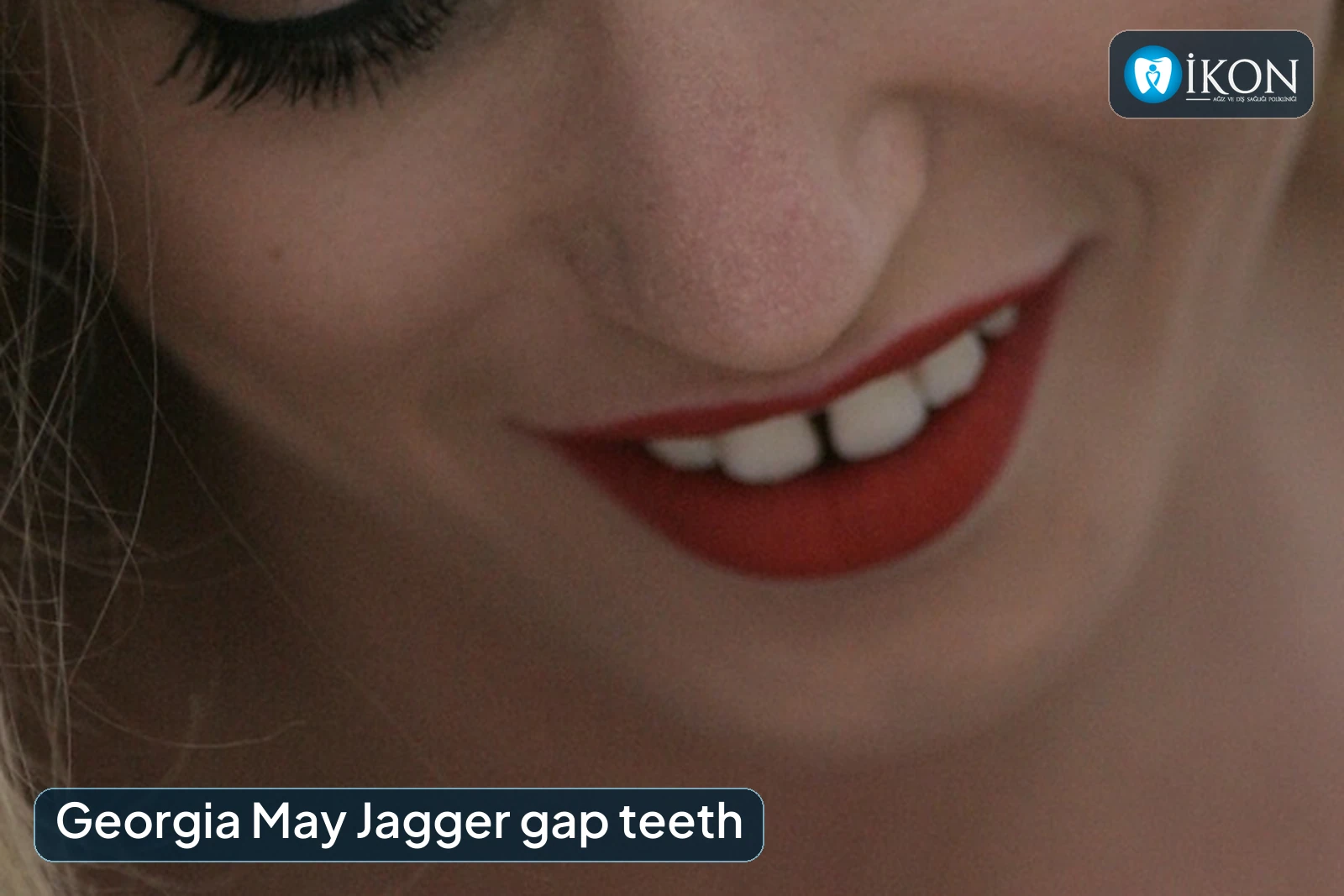
Model Georgia May Jagger has said in interviews, including one reported by HuffPost in 2013, that she keeps the gap between her front teeth. The gap became part of her public image, including a Rimmel advertising campaign. Reports link a 2014 Rimmel advert to a meme about her gap, but that comes from secondary sources only.
Keira Knightley's teeth
Keira Knightley, according to a 2007 Associated Press interview at the Toronto film festival, said she had declined to have braces. We found nothing more recent that adds to this, so we keep it brief.
Patient storiesOur patients talk about their new smile
Real patients, in their own videos. Tap a video to watch it. More patient videos →


Why many Brits now travel to Turkey for dental work
If NHS access is limited and private treatment in the UK is expensive, it is not surprising that people look abroad. Turkey teeth, the shorthand for veneers or crowns done in a Turkish clinic, became a mainstream phrase. Dentistry.co.uk reported that searches for the term rose by 10,000% overnight in 2023 after a Love Island contestant mentioned it, though the underlying search data was not named, so treat the figure as reported rather than measured.[11]
The main driver is cost. In a 2022 British Dental Association survey of 1,000 UK dentists, 98% cited lower cost as the main reason patients go abroad, and 31% cited shorter waits.[4]
Turkey teeth in the UK: what the BDA survey found, and what it did not
The same 2022 survey found that 94% of the dentists had seen patients who had treatment abroad, and 86% of those dentists had treated patients with adverse outcomes. Crowns needed follow-up most often, then implants. 51% of them estimated repair costs at over £1,000, and more than 40% said the NHS provided the remedial care. The association's chair, Eddie Crouch, warned that UK dentists were often picking up the pieces and cautioned patients to be wary of a hard sell.[4]
Two cautions about these figures. They date from 2022, and we found no newer survey from the association. And they come from dentists describing cases they have seen, so they do not give a failure rate for patients. The practical point is that when things do go wrong, repairs can be expensive to arrange at home.
What to check before you book abroad
Ask who the treating dentist will be and what their qualifications are. Ask for a written plan with the materials and brands named. Find out what the clinic does if something goes wrong after you fly home, and who covers a revision. Be cautious if you are pushed to decide quickly or offered a package before anyone has examined you. A clinic should be willing to say no to a treatment as well as yes.
Remember too that a UK dentist may be reluctant to take on someone else's work, and that the NHS does not cover the consequences of private treatment overseas.
Why orthodontics comes first, and less is often more
At İkon Dental in Istanbul, our medical director, Assoc. Prof. Dr. Hakan Yılmaz, is an orthodontist, and our view is that moving teeth is often kinder than grinding them. For crowding or gaps, aligners or braces can change a smile without removing healthy enamel, while veneers are harder to undo. Not everyone needs either. A free examination, X-rays and 3D scan come first, and we will tell you when the best advice is to do very little.
If you are weighing up a trip, our Turkey teeth prices page sets out what we charge, our orthodontics and clear aligners page explains the options for straightening, and our guide to composite bonding costs covers a less invasive route for small gaps.
British teeth: myths and facts
A lot of what is said about British teeth is half true at best. Here is how common claims stand against what we could verify.
| Claim | Verdict | What we found |
|---|---|---|
| British adults have worse teeth than Americans. | False | The BMJ study found slightly fewer missing teeth in England (6.97 against 7.31) and smaller inequalities. It measured tooth loss only, not appearance or alignment.[1] |
| British teeth look worse than American teeth. | Unproven | Nobody has measured it properly. The BMJ surveys did not include aesthetic or orthodontic outcomes.[1] |
| The NHS caused the stereotype. | Unproven | The BMJ paper points to adverts and popular culture, not the health service. Sugar, rationing and fluoride are often suggested, but we found no reliable source for them.[1] |
| Austin Powers started it. | False | The film made it global in 1997, but a Simpsons episode made the same joke in 1993, and the BMJ paper says the belief goes back at least 100 years.[2][1] |
| Everyone in Britain gets free braces on the NHS. | False | Braces are usually free only for under-18s with a clear need, as decided by an orthodontist. Adults usually pay.[3] |
| Most Turkey teeth go wrong. | Unproven | The BDA survey asked dentists about cases they had seen. It does not give a failure rate among patients.[4] |
What an orthodontist wants you to know
We are not diagnosing anyone here. These are points orthodontists commonly raise with patients who ask whether their teeth are normal.
Straight is not the same as healthy
A slightly crowded smile can be healthy, and a perfectly aligned one can have gum disease. The questions that matter clinically are whether the bite works, whether the teeth can be cleaned easily and whether the gums are healthy. Appearance is a separate and legitimate question, but it is a personal one.
Adults can have orthodontic treatment
Teeth can be moved at any age as long as the gums and supporting bone are healthy. Treatment usually ends with a retainer to hold the result.
Retainers are part of the treatment
Teeth tend to drift back after braces or aligners, which is why royals and ordinary patients alike wear retainers for years. Ask about retention before you start, not at the end.
Gaps and crowding are usually cosmetic
Most small gaps and mild crowding do not damage teeth. A new or widening gap in an adult is different, and can point to gum disease. If that is you, see a dentist rather than waiting. If you also need a clean first, see our guide to tartar removal.
Do not let a stereotype decide for you
Whether to change your teeth should depend on what you see in the mirror and what your orthodontist finds, not on a joke from 1993.
If you want a straighter smile: the options
Whether crowding bothers you or not is entirely your decision. If it does, the right approach depends on the cause, and orthodontics, bonding and veneers do different jobs. Here is how the options compare.
| Treatment | What it does | Best for | Reversible? | Typical time | Price at İkon Dental |
|---|---|---|---|---|---|
| Clear aligners | Removable plastic trays move the teeth gradually. | Mild to moderate crowding, small gaps, rotated teeth | Yes, nothing is removed from the teeth | Often 6–18 months | Priced after your assessment |
| Fixed braces | Brackets and a wire move the teeth around the clock. | Crowding, bite problems, canines out of line | Yes | Usually 12–24 months | Priced after your assessment |
| Composite bonding | Tooth-coloured resin is added to the tooth and shaped. | Small gaps, chipped or slightly uneven edges | Largely, little or no enamel is removed | One visit | Priced per tooth after your assessment |
| Porcelain (E-max) veneers | Thin ceramic shells are bonded to the front of the teeth. | Changing the shape, size and colour of several front teeth | No, some enamel is usually removed | About a week in Istanbul | €250 per tooth |
| Teeth whitening | A bleaching gel lightens the natural tooth colour. | Yellowed or stained teeth that are otherwise fine | Yes, the colour fades slowly over time | One visit | €200 |
Prices from our current price list. The examination, X-rays and 3D scan at the clinic are free, and your final plan and price are confirmed in writing after your examination. Orthodontic treatment needs regular check-ups over many months, so it suits people who live in Istanbul or can visit regularly. See the full price list →
Questions about British teeth
Why do British people have bad teeth?
The premise is weaker than it sounds. A 2015 BMJ study found that English adults had slightly fewer missing teeth than American adults. What looks different is often untreated minor crowding, because NHS braces are mainly for under-18s with a clear clinical need and adults usually pay.
Why are British teeth like that?
If you mean the crooked-smile stereotype, it began as a joke in American popular culture. The BMJ authors say the belief goes back at least a century and was reinforced by adverts and films, including a 1993 Simpsons episode and the 1997 film Austin Powers.
Why are British teeth different?
Differences in appearance, where they exist, probably reflect how dental care is paid for and cultural taste, not biology. The BMJ study did not measure appearance, so we cannot give a measured explanation.
What are average British teeth like?
Average figures exist only for health measures. English adults aged 25 and over were missing about seven teeth on average in the 2009 survey used in the BMJ study. There is no reliable national measure of how straight or white British teeth look.
Where did the British teeth stereotype come from?
The BMJ paper says it dates back at least 100 years and was reinforced by toothpaste adverts and popular culture. Documented examples include The Simpsons in 1993 and Austin Powers in 1997.
Are British teeth worse than American teeth?
On missing teeth, no. English adults had 6.97 missing teeth on average against 7.31 for Americans in the BMJ study, and inequalities were smaller. The study did not measure appearance.
Can adults get braces on the NHS?
Usually not. The NHS says braces are usually free only for people under 18 with a problem with their teeth, and an orthodontist decides eligibility. Adults usually pay, although some with a significant jaw discrepancy can be treated in hospital.
Why is it so hard to see an NHS dentist?
In England in 2025/26, 18.8 million adults, about 40%, were seen in the 24 months to March 2026, and the Royal College of Surgeons says access depends largely on where people live. Demand is high and capacity is limited.
Is it safe to get Turkey teeth from the UK?
Results vary, and a 2022 BDA survey of 1,000 UK dentists found that 94% had seen patients treated abroad and 86% of those had seen adverse outcomes. Check the dentist's qualifications, ask for a written plan and find out who handles problems after you return home.
Did Prince William and Prince Harry have braces?
Both have been reported to. A St James's Palace spokesman said in 2009 that Prince William wore a wire support behind his lower teeth for about ten years after braces at 16, and Prince Harry was photographed in braces in 1999.
Keep readingMore from our blog
Sources
- BMJ (PubMed Central), "Guarnizo-Herreño CC et al. Austin Powers bites back: a cross sectional comparison of US and English national oral health surveys", December 2015.
- Wikipedia, "Last Exit to Springfield (The Simpsons, season 4, episode 17)", Aired 11 Mar 1993.
- NHS, "Braces", Accessed 19 Nov 2026.
- Dental Tribune UK, "Dental tourism among UK patients is on the rise, BDA reports", 25 Jul 2022.
- Simpsons Wiki, "The Big Book of British Smiles", Accessed 12 Nov 2026.
- People's History of the NHS, "NHS teeth", Archived copy, 4 Jun 2026.
- NHS Business Services Authority, "Dental statistics, England 2025/26", Published 27 Aug 2026.
- Royal College of Surgeons of England, "NHS data on dental access (press release)", 27 Aug 2026.
- City A.M., "Britain's dentistry woes are creating a health tourism boom for Turkey", 28 Sep 2022.
- Irish Post, "The Pogues' Shane MacGowan debuts brand new smile after nine-hour dental operation", 21 Dec 2015.
- Dentistry.co.uk, "Love Island prompts 10,000% rise in Turkey teeth searches", 15 Jun 2023.
This article is general information, not a diagnosis or personal medical advice. Treatment needs, results and costs vary from person to person, so please see a dentist or orthodontist for advice about your own teeth. Celebrity photos: Wikimedia Commons, credited in each image's metadata and the sources list.

Your journey starts here
Your next chapter
begins with a conversation.
Tell us what you would like to change. We reply with options, the days you would need in Istanbul and a price range. Free, and with no obligation.
- WhatsAppMessage us on WhatsApp
- Call+90 546 690 88 10
- Emailinfo@ikondis.com