
Blog · Dental guide
Composite bonding cost: UK vs Turkey, and when orthodontics should come first Indicative prices per tooth, how long bonding lasts, how it compares with veneers, and what to check before you travel or book.

The short answer
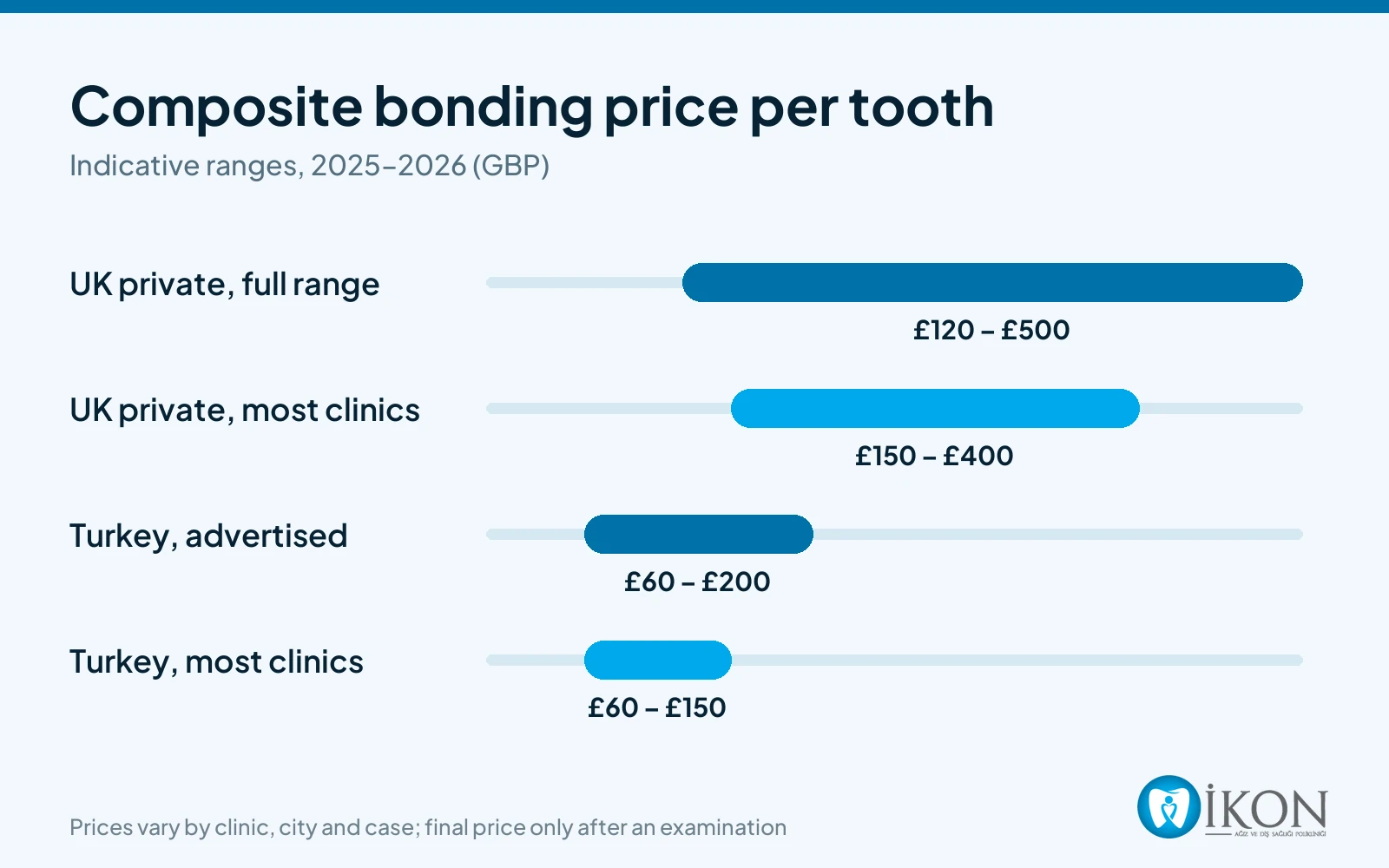
Composite bonding is a tooth-coloured resin that a dentist shapes directly onto a tooth, usually in one visit and often without removing enamel. In the UK, private clinics typically charge about £120 to £500 per tooth, with most between £150 and £400.[6][7] Prices advertised in Turkey are lower, roughly £60 to £200 per tooth, but they depend on the clinic and the package, so treat them as a guide. It is not offered on the NHS for cosmetic reasons.[3] Expect it to last roughly 3 to 10 years, usually 5 to 7.[1][2] And if your teeth are crowded, rotated or unevenly spaced, straightening them first can change how much bonding you need at all.
Below we cover what bonding is, what each stage involves, realistic UK and Turkish prices, how it compares with veneers, and the orthodontist's question that cosmetic-only clinics rarely ask: would moving the teeth first give a better result?
What is composite bonding?
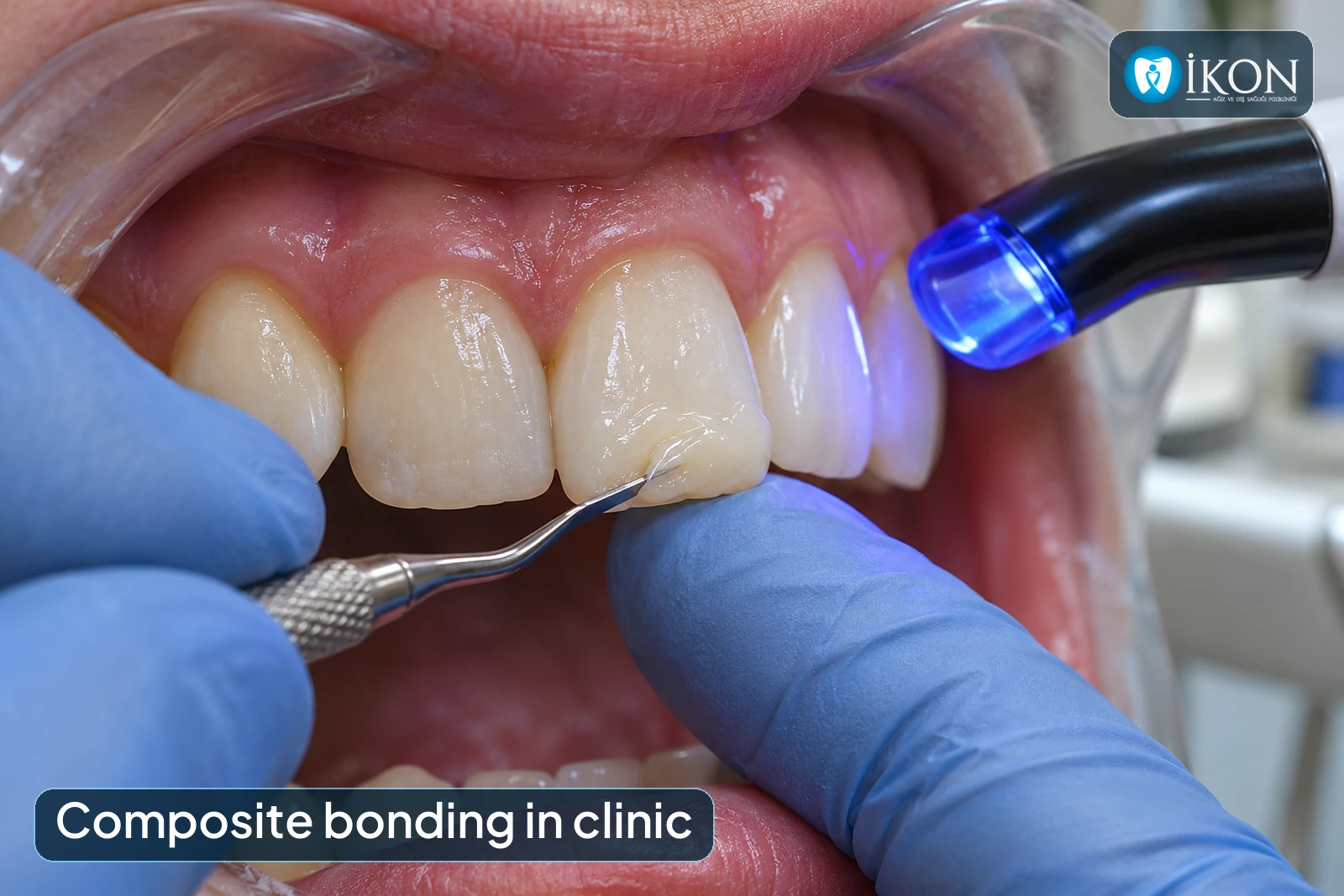
Composite bonding is a cosmetic treatment in which a dentist applies tooth-coloured resin to the surface or edge of a tooth, shapes it by hand, hardens it with a blue light and polishes it. It can close a small gap, repair a chip, even out a short or uneven edge, or improve a tooth that looks slightly narrow or worn.
Its main appeal is that it is a minimal-intervention treatment. The dentist usually adds material rather than taking tooth away, so there is little or no enamel removal and often no drilling or anaesthetic.[1][2] Because so little is cut away, bonding can sometimes be reversed or revised, though not always, and the result depends heavily on the skill of the person sculpting the resin.[2]
Natural composite bonding: shade, texture and polish
Natural composite bonding comes down to three things. The shade must match the neighbouring teeth in daylight, not only under the surgery lamp. The surface needs the same faint texture and gloss as enamel. And the shape has to suit your face and bite. A digital wax-up, a preview of the planned shape, lets you agree the outcome before any resin is placed.[2] If a clinic cannot explain how it will match shade and shape, keep asking questions.
Composite veneers vs composite bonding: what is the difference?
The terms overlap, which causes confusion. Edge bonding is a localised addition: the dentist builds up the biting edge of a tooth, or fills a small chip or gap, and leaves the rest of the tooth alone. Composite veneers cover the whole front surface of the tooth with a layer of resin, which suits a larger change in shape or colour.[3]
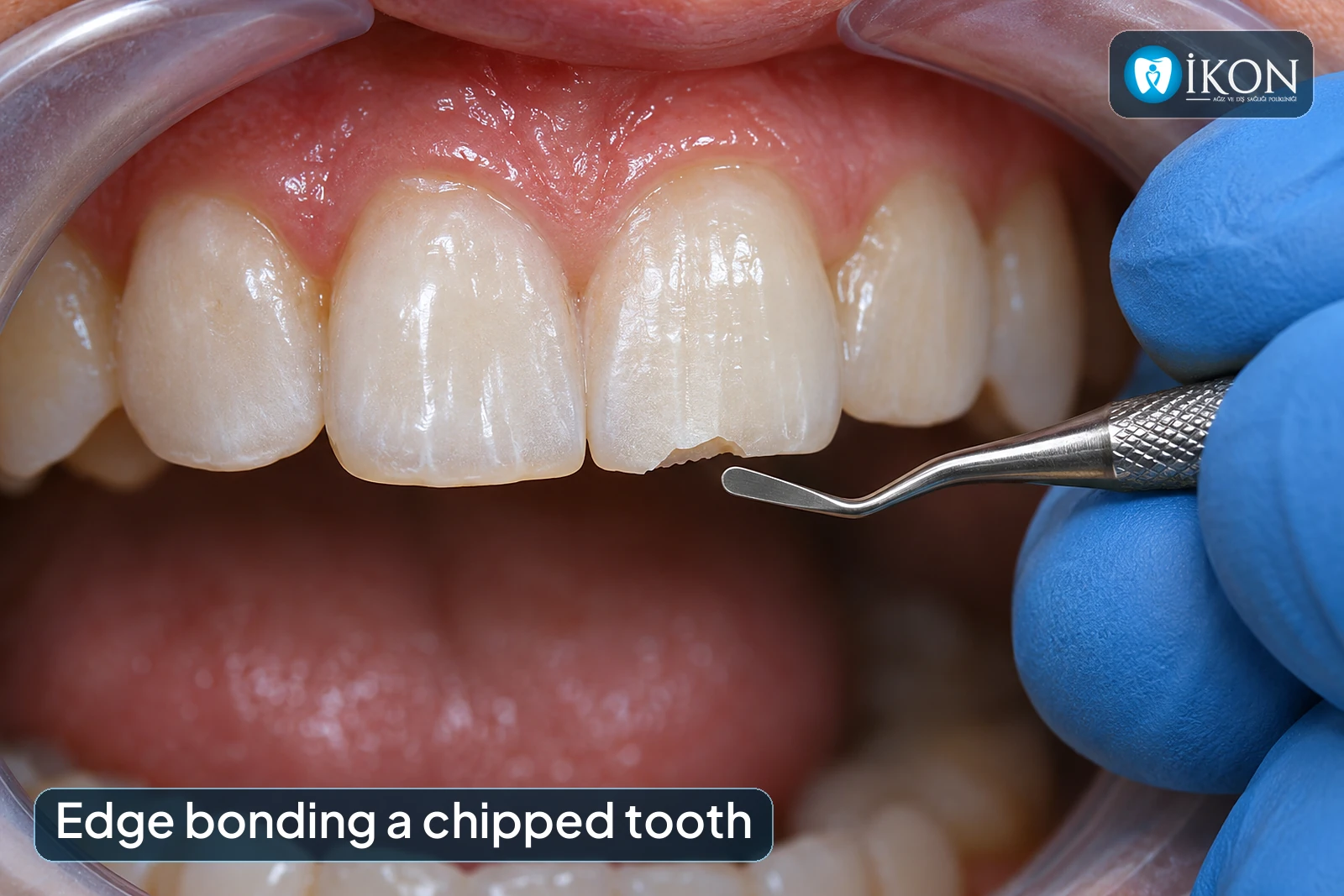
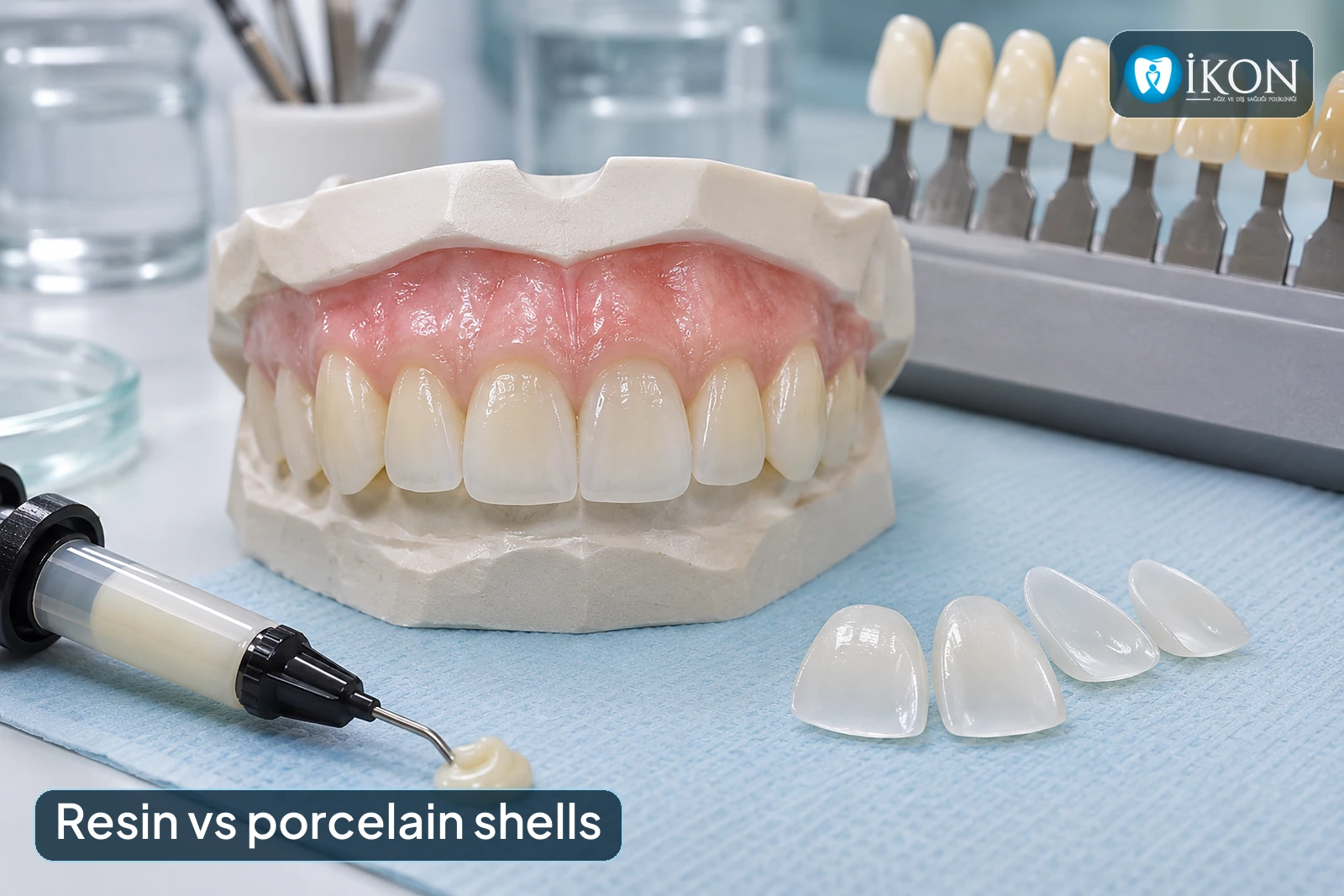
Both are built directly in the mouth, usually in one appointment, unlike porcelain veneers, which are made in a laboratory. The more surface a restoration covers, the more visible its edges and the greater the chance of staining or chipping, so it is worth asking which of the two your dentist is actually proposing.
When is edge bonding enough?
Edge bonding fits when the tooth is healthy and the problem is small: a worn or chipped biting edge, a tiny gap, one tooth a little shorter than its neighbour. If the concern is colour across the whole tooth, whitening first and a small repair afterwards may be simpler than covering the entire surface.
How composite bonding works, step by step
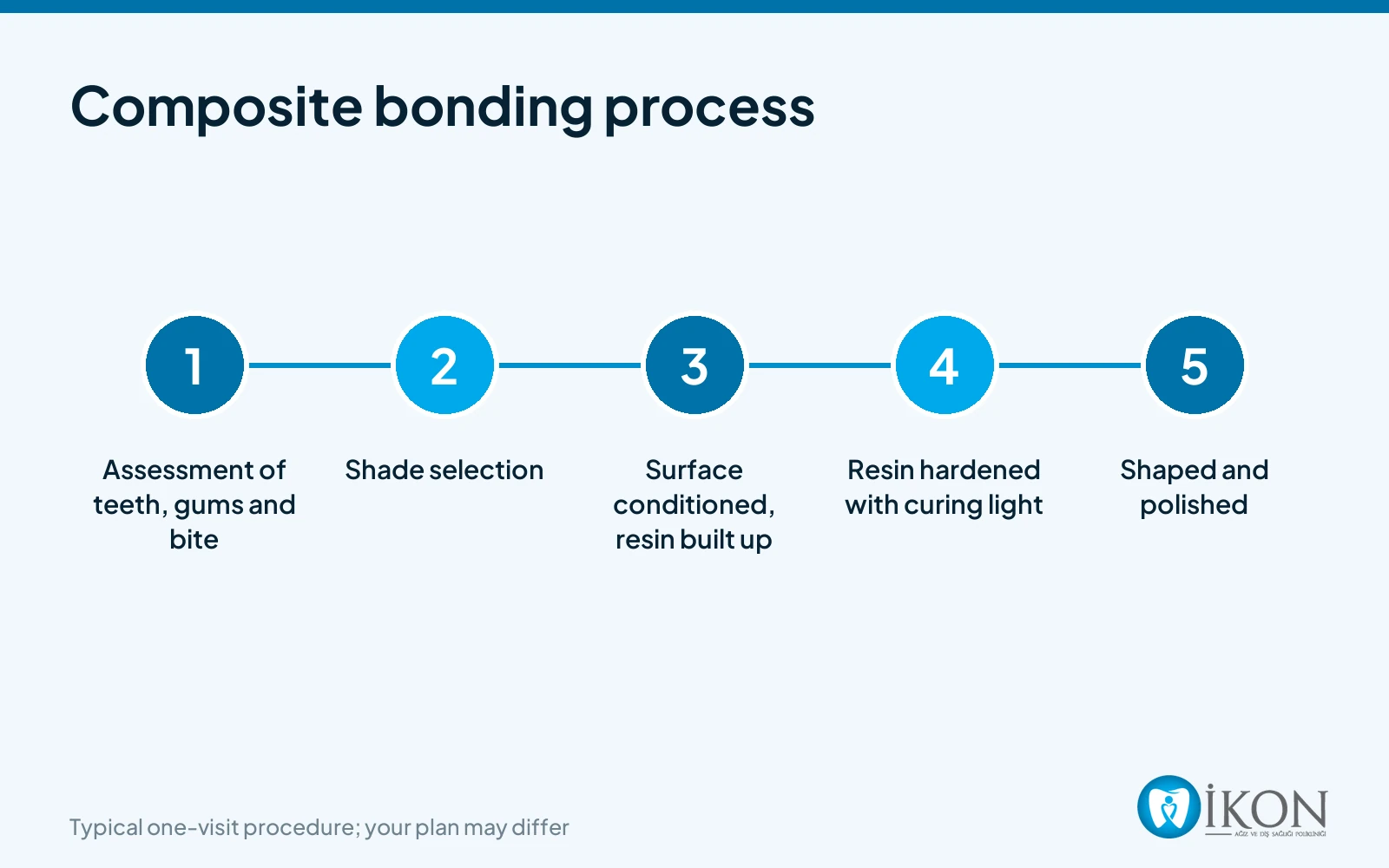
A typical appointment starts with an assessment: the dentist checks for decay, gum health and your bite, and discusses what you want. Next the shade is chosen against the surrounding teeth. The tooth surface is lightly roughened and conditioned so the resin grips, and the resin is built up in layers and moulded. Each layer is hardened with a curing light, then trimmed, shaped and polished until it looks and feels like enamel.[1]
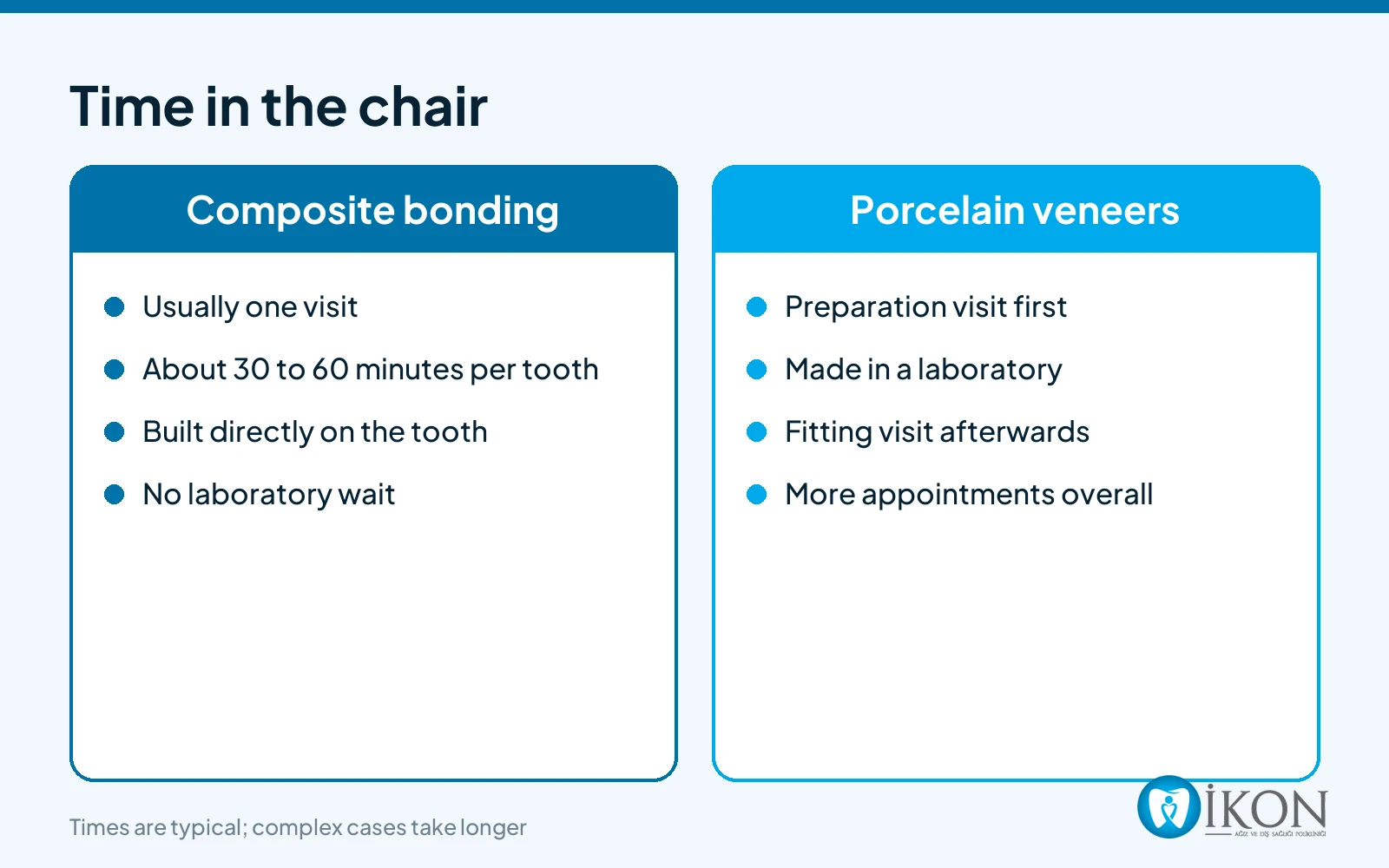
Most people need one visit, and each tooth takes around 30 to 60 minutes.[1] Because enamel is generally left in place, numbing is often unnecessary.[2]
Composite bonding aftercare
Aftercare is simple but worth taking seriously. Brush twice a day and clean between the teeth, and avoid biting nails, chewing pens or opening packets with your teeth. Resin is more porous than enamel, so it picks up stains more easily. Plan a polish roughly once a year and check-ups every 6 to 12 months, and if you grind your teeth, ask about a night guard.[1][2]
Composite bonding before and after: realistic results
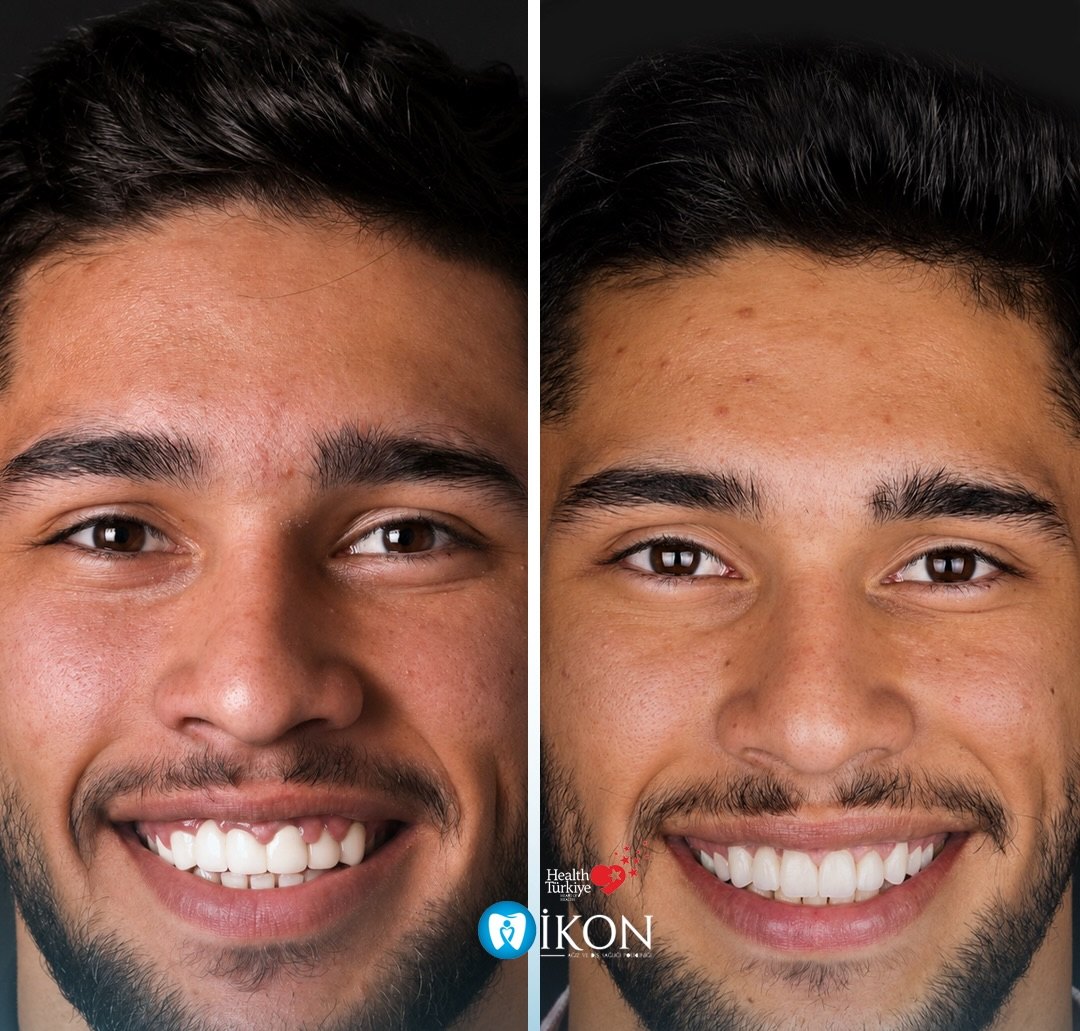
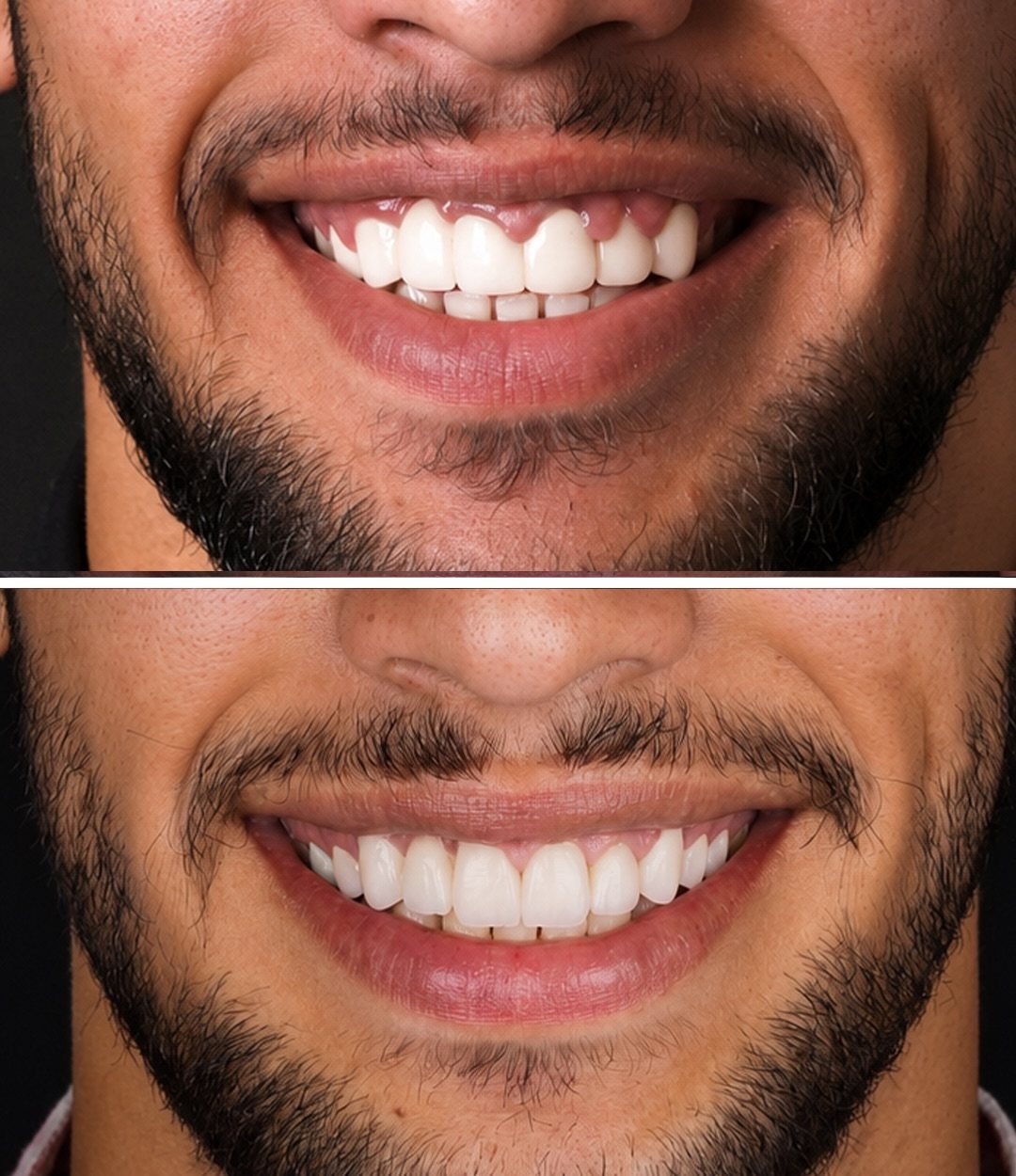
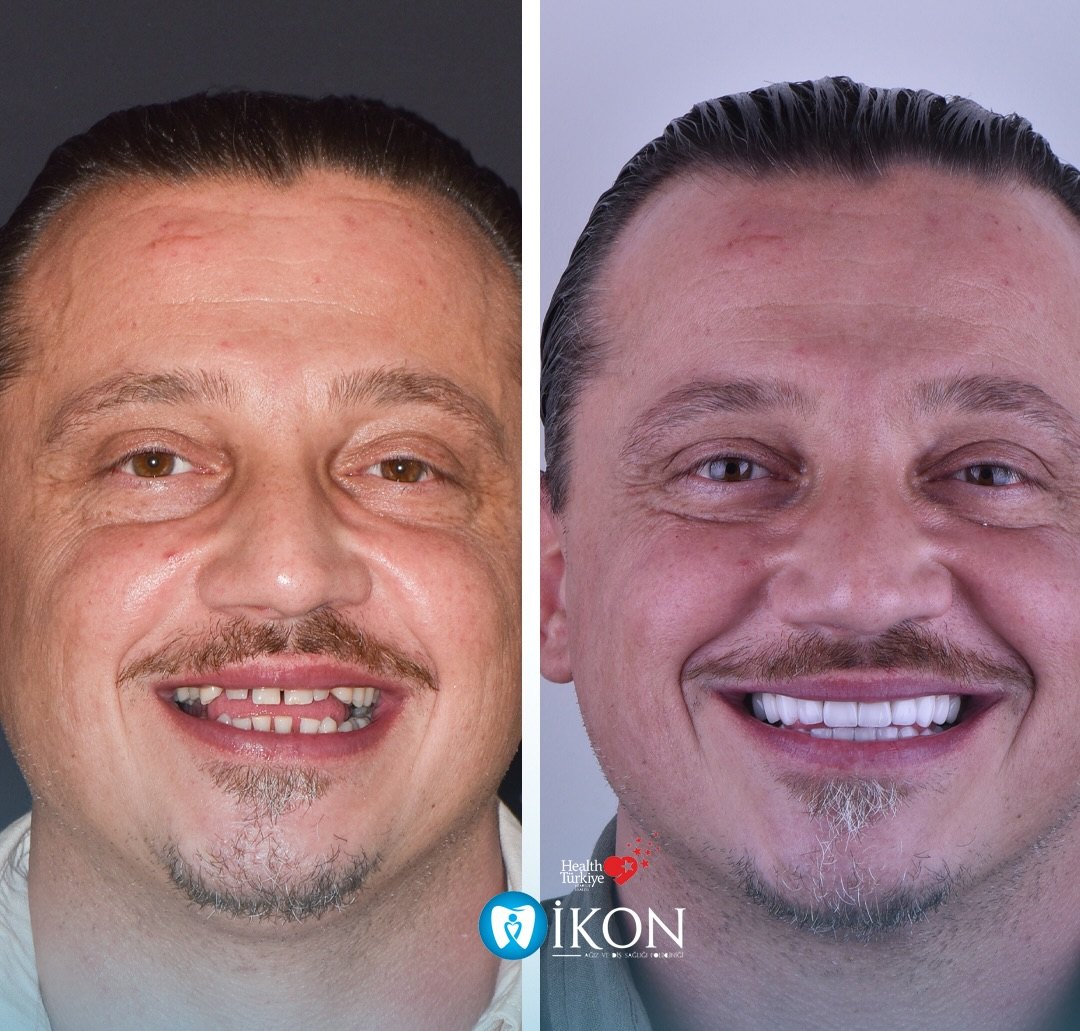
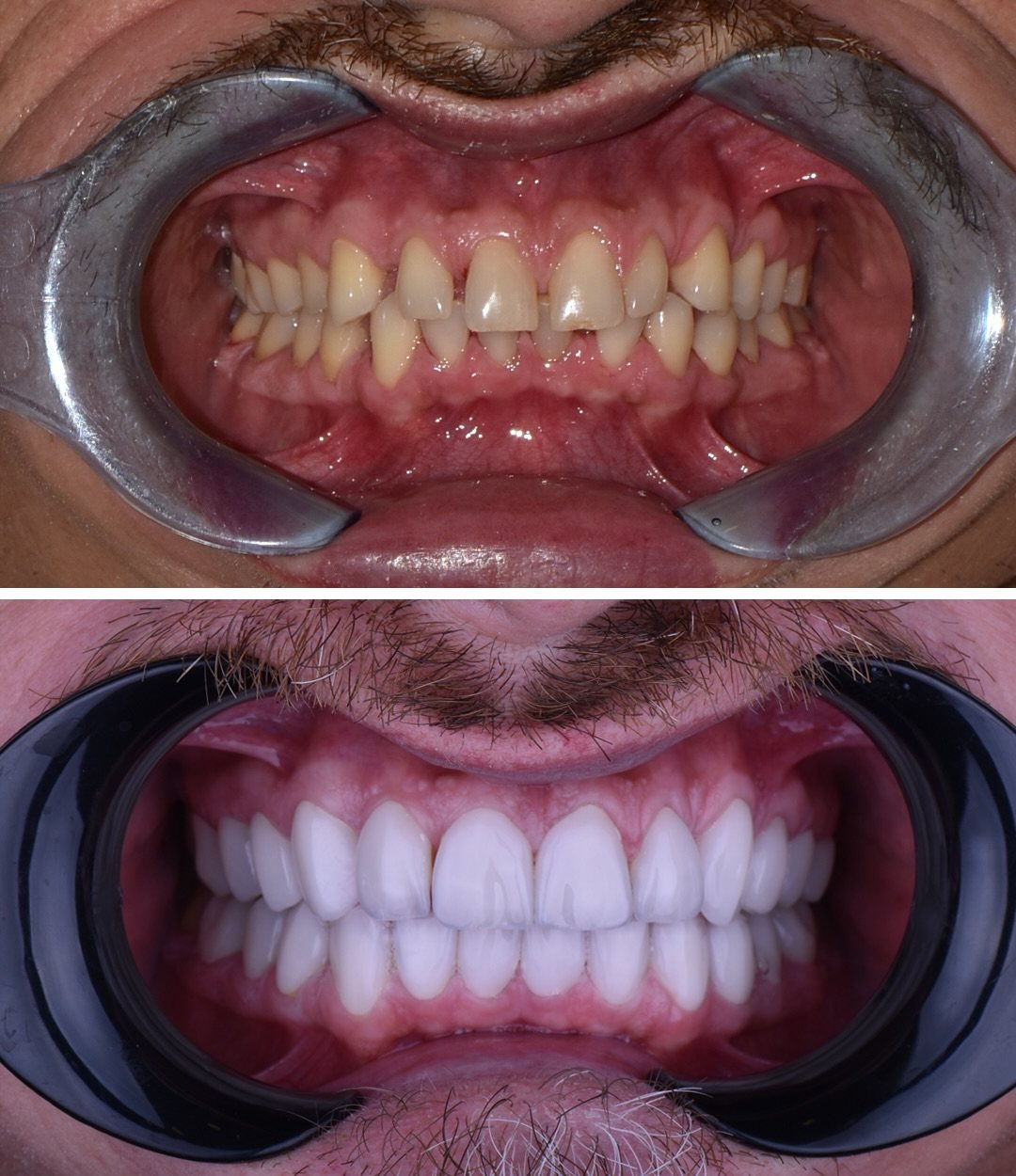
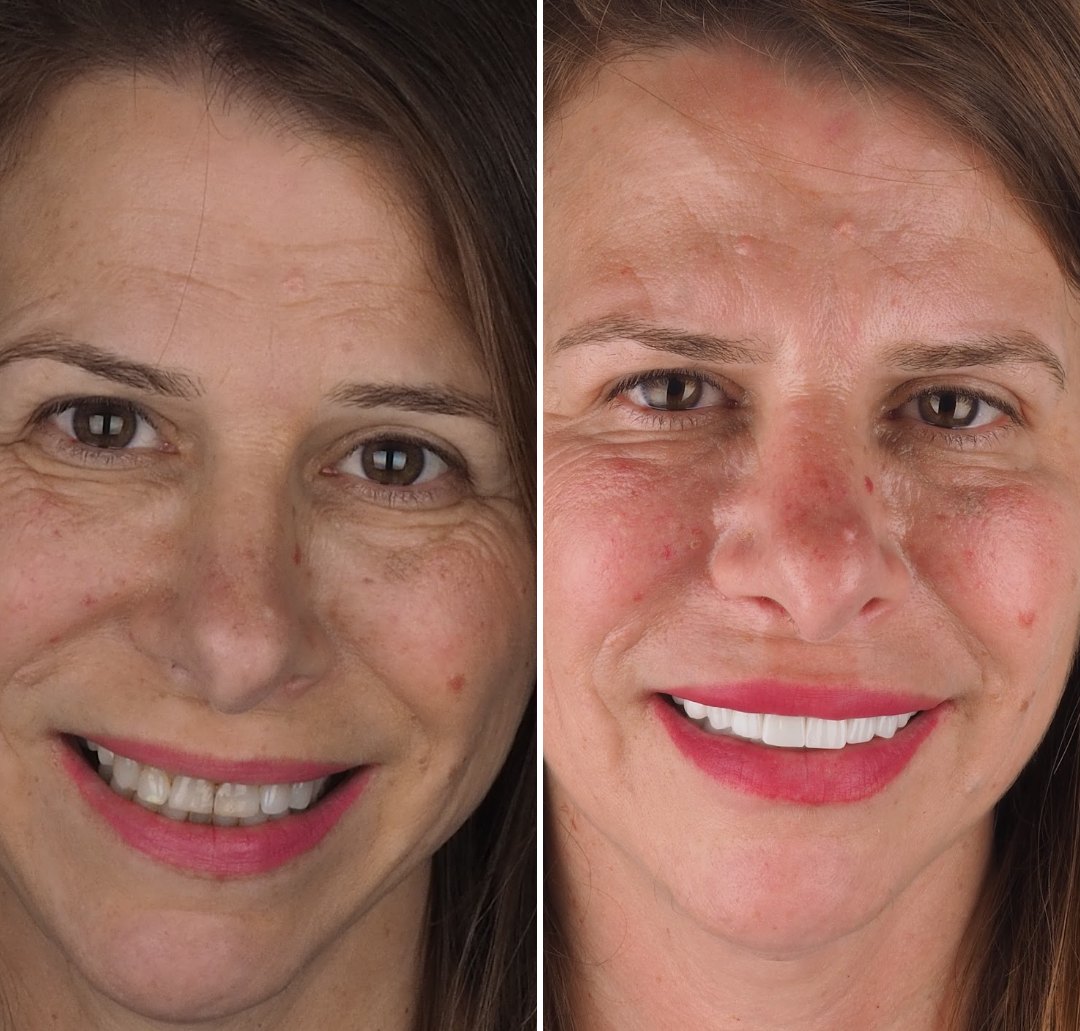
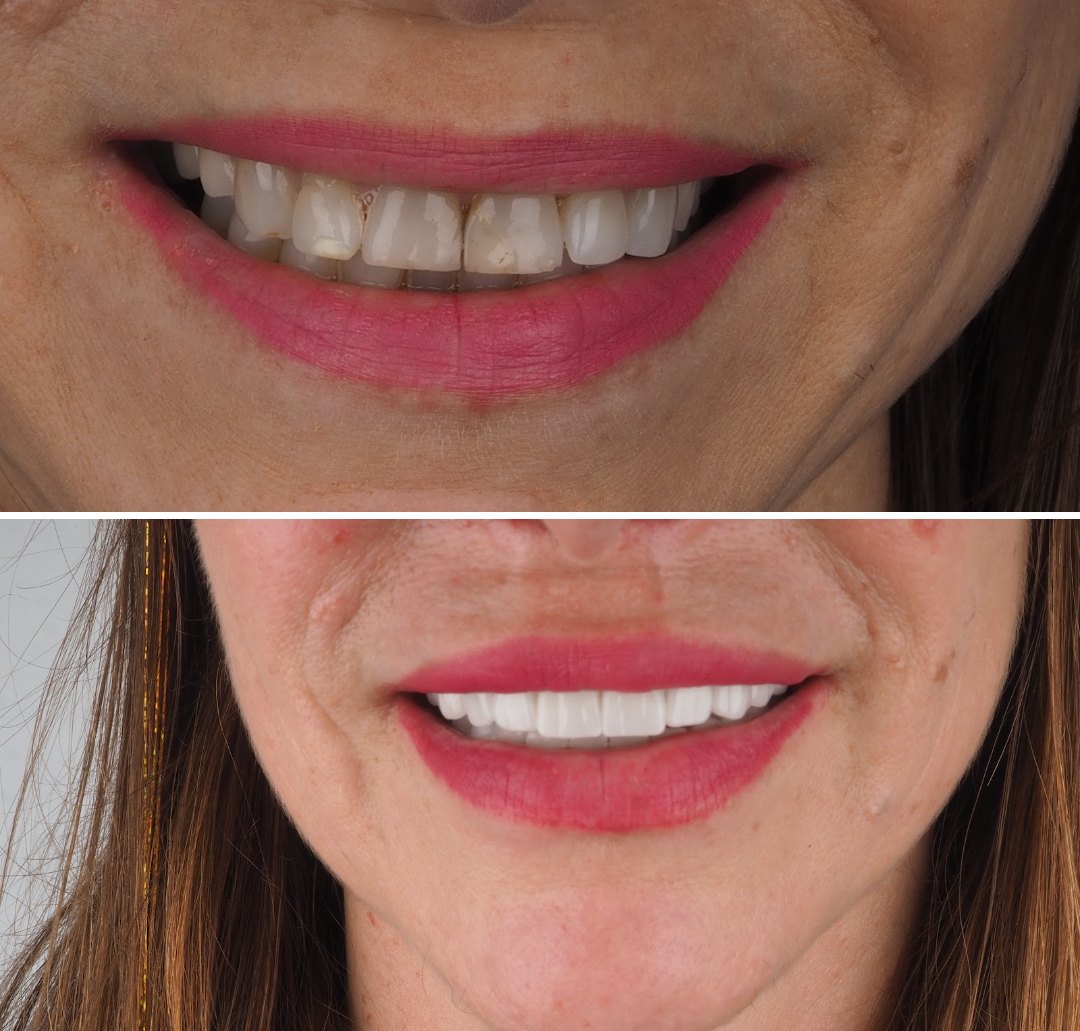
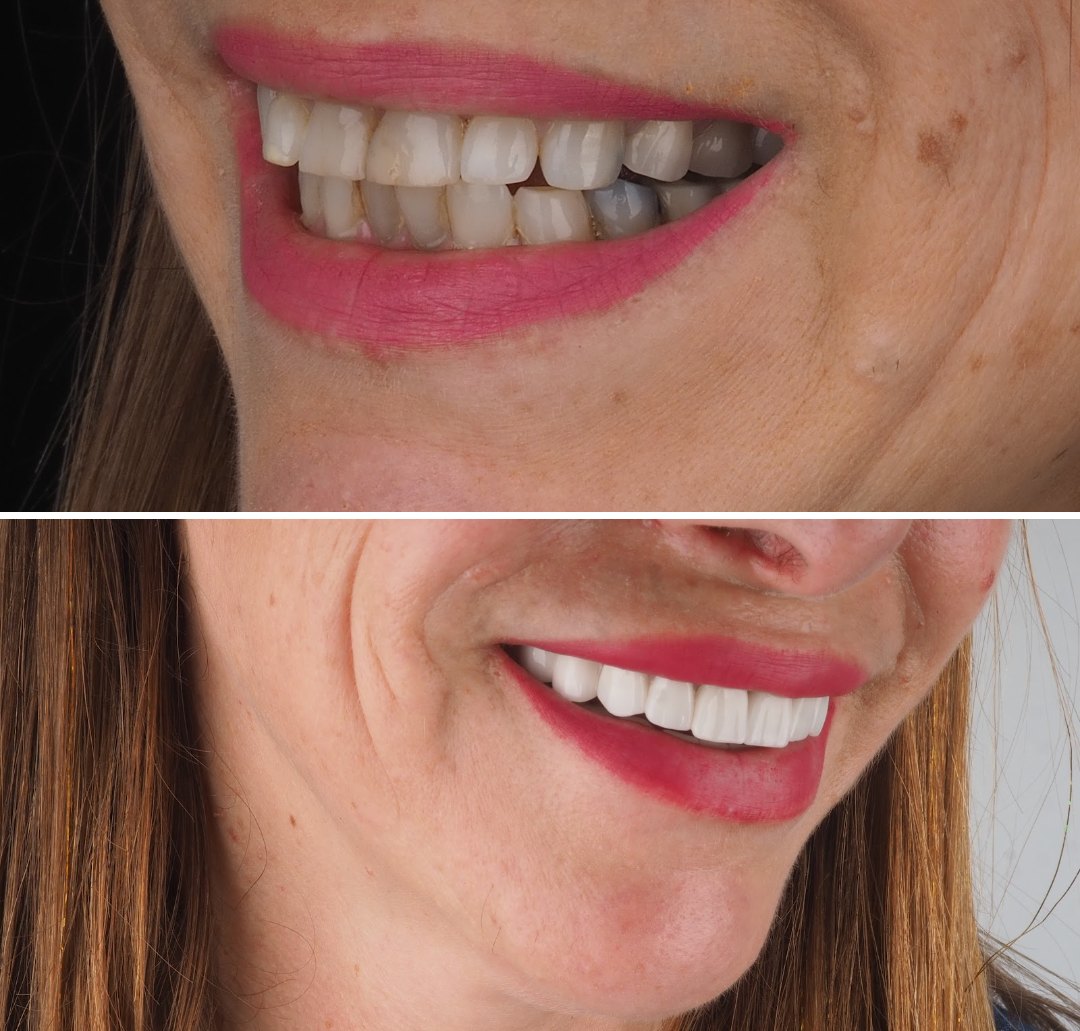
A fair before-and-after gallery should show genuine cases and say which treatment was used. The images below are smile makeovers from our clinics in Istanbul, which can combine several treatments, so please do not read them as bonding alone. Ask any clinic, including us, for examples of the exact treatment you are considering.
Real patients, not celebritiesSmile makeovers at İkon Dental: before and after
Patients treated at our clinics in Istanbul. Tap a photo to enlarge it.



How long does composite bonding last?
Published estimates differ: about 3 to 10 years in one source and 3 to 7 in another. A fair summary is roughly 3 to 10 years, with 5 to 7 a common experience, depending on your bite, your habits and how well the bonding is maintained.[1][2] A systematic review of composite restorations in front teeth reported annual failure rates between 0 and about 4 percent, with fracture the most common problem. Those studies cover varied materials and cases, so use the figures as a guide only.[5]
Grinding or clenching is the biggest threat to bonded edges, followed by habits such as nail biting. Whitening will not lighten cured resin, so if you plan to whiten, do it first and match the bonding to the new shade.[2]
How long a bonding appointment takes
Bonding is usually finished in a single visit at roughly 30 to 60 minutes per tooth, so a few teeth fill a long appointment but no waiting for a laboratory. Porcelain veneers are made in a lab and normally need preparation and fitting visits.
How much is composite bonding UK?
Cosmetic bonding is a private treatment in the UK. The NHS does not provide it for cosmetic reasons, although a repair that is clinically needed, after an injury for example, is treated differently.[3] Private fees are roughly £120 to £500 per tooth, most between £150 and £400, simple edge repairs from about £100 to £200, and London or complex work from £400 upwards.[6][7] These are indicative 2025 to 2026 ranges and change from practice to practice.
Composite bonding cost UK: what is in the fee
The fee reflects the dentist's experience, how much of the tooth is rebuilt, how many teeth are treated and whether a digital preview, polish visit and review are included. One clinic guide quotes about £235 to £300 per tooth.[6] Always ask what the quoted figure covers.
Composite bonding price
A small chip repair sits at the bottom of the scale, while a tooth that is substantially reshaped or lengthened sits at the top. Two quotes are only comparable if they describe the same amount of work.
Composite bonding price UK: the indicative price list
Per tooth, as a guide: simple edge repair about £100 to £200, typical cases about £150 to £400, London or complex work from about £400, and £120 to £500 as the overall range.
How much is composite bonding UK full set?
A full set usually means the upper six to eight teeth. Multiplying the typical per-tooth range by six to eight gives very roughly £900 to £3,200 before any package discount. That is arithmetic, not a quote.
Composite bonding London: a price benchmark
Expect the composite bonding cost London practices quote to sit towards the top of the UK range, with complex work from about £400 per tooth.[7]
Cheap composite bonding: why very low prices are a red flag
A price far below the ranges above can mean less time spent on shade matching, no digital preview, no polish or review visit, or a dentist with little experience of sculpting resin. Resin work is skill-dependent. Ask who will do the treatment, what is included and what happens if it chips.
Cost of composite bonding Turkey: what you pay and what to check
Clinic and marketing pages in Turkey typically advertise about £60 to £200 per tooth (roughly $80 to $300), most between £60 and £150. These are indicative and vary by clinic, city, complexity and package. When you search for a composite bonding in Turkey price, compare like with like: the same number of teeth, the same seniority of dentist and the same follow-up.
At İkon Dental, bonding is not on our published price list. It is priced per tooth after your assessment. For reference, our published list shows E-max veneers at €250 per tooth and whitening at €200.
How much is composite bonding per tooth? UK vs Turkey
On advertised figures, the Turkish per-tooth range sits well below the UK one, as the chart shows. The gap is real, but price is only one part of the decision. The questions below matter more than saving the last pound.
How much is composite bonding Turkey full set?
Six to eight teeth at £60 to £150 each gives roughly £360 to £1,200, again simple arithmetic. Check whether a package includes the assessment, shade matching, polish and a follow-up plan.
Are composite bonding Turkey packages worth it?
Packages often bundle transfers or hotel nights with treatment. Judge them on the clinical part: who does the bonding, how long you are given, and what happens if something chips after you fly home.
Best place for composite bonding Turkey: how to choose a clinic
The General Dental Council's guidance for patients going abroad says there is no guarantee of equivalent regulation overseas. It suggests getting an assessment before agreeing a plan and price, asking about aftercare, guarantees, who pays for remedial work and how to complain, and telling your own dentist.[4] This applies to any country, not to Turkey in particular.
Composite bonding Turkey before and after: what to check
Ask whether the photos show that clinic's own bonding cases, taken in consistent lighting without filters, and whether any are veneers or crowns shown as bonding. Ask the name of the dentist who did the work.
Composite bonding vs veneers
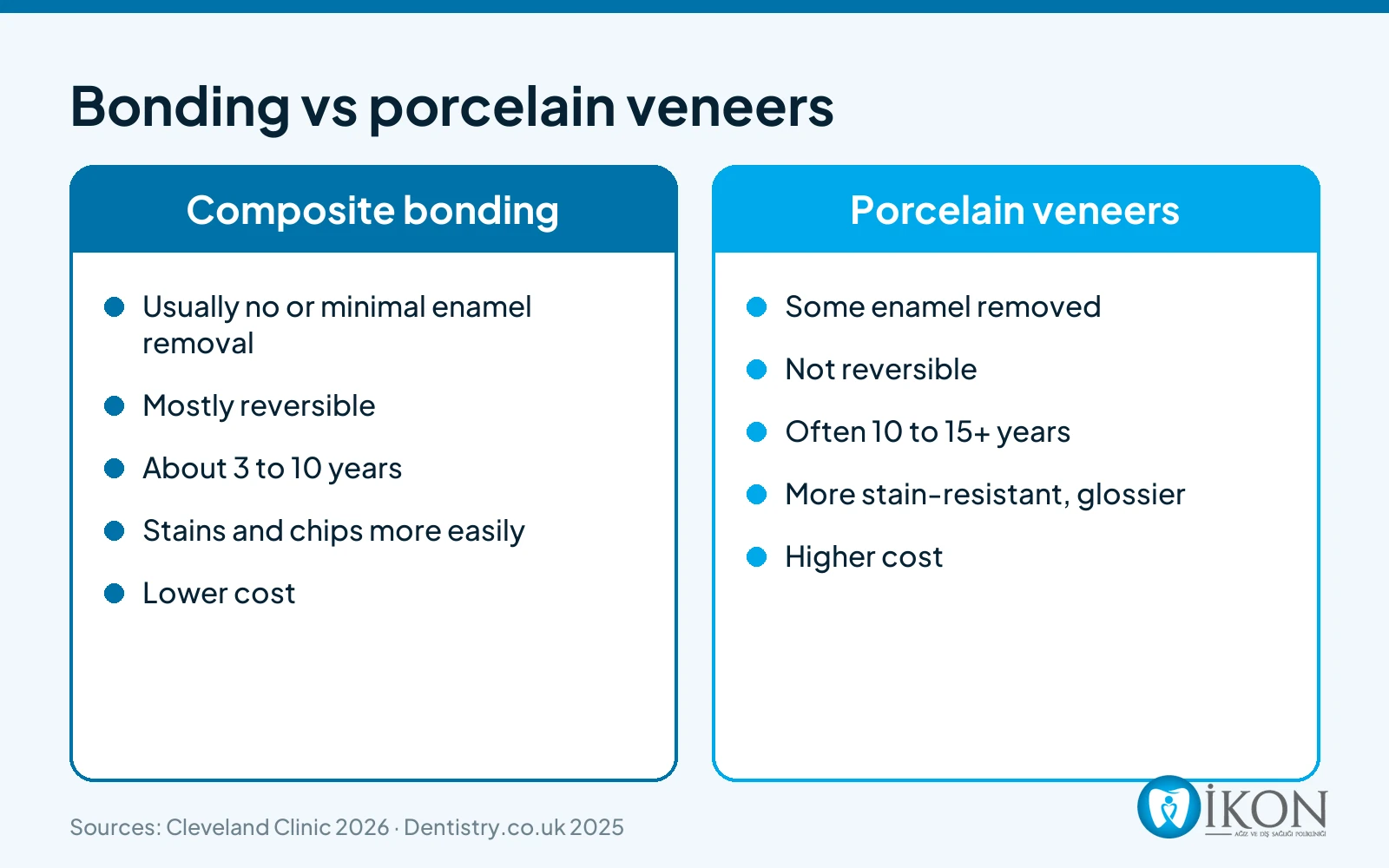
In short, bonding is the gentler, quicker and cheaper option, while porcelain veneers are more durable and better for larger changes. Bonding usually involves no or minimal enamel removal, is mostly reversible, lasts roughly 3 to 10 years and stains or chips more easily.[1][2] Porcelain veneers need some enamel removed, cannot be undone, commonly last 10 to 15 years or more, resist stains better, have a glossier finish and suit bigger changes in shape or colour.
Which one for which problem?
A small chip, a short edge or a narrow gap points towards bonding. Widespread discolouration, many teeth or a large reshaping point towards veneers. Because bonding commits little tooth structure, it is a reasonable first step when you are unsure, as long as you accept that it may need refreshing sooner.
Patient storiesOur patients talk about their new smile
Real patients, in their own videos. Tap a video to watch it. More patient videos →



Invisalign and composite bonding: why straightening can come first
İkon Dental is led by an orthodontist, Assoc. Prof. Dr. Hakan Yılmaz, so this is where our view differs from clinics that only offer cosmetic work. Moving teeth into better positions first can reduce how much material has to be added or how much tooth has to be removed, and in some cases it makes cosmetic work unnecessary. The evidence is mostly expert opinion and small studies, so we treat it as sound principle, not a promise.
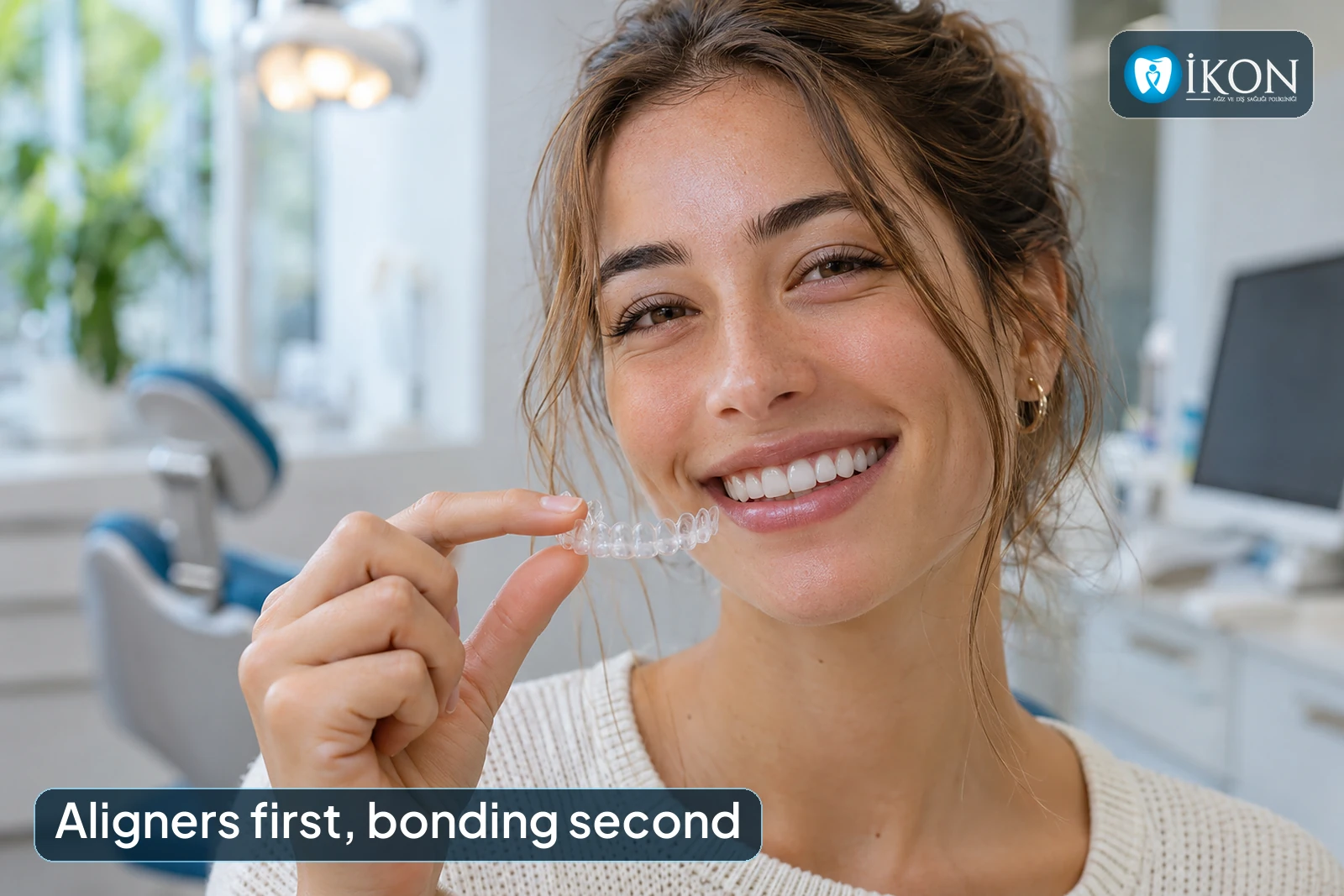
Aligners do not remove the need for bonding in every case. Chips, worn edges, small teeth and shape or colour concerns can still need it afterwards. The sensible order is to align, retain, and then bond only what is left.
Composite bonding after Invisalign
Many people finish aligners with one small issue left, such as a short edge, a tiny gap or a slightly narrow tooth. Bonding then works on a settled position and can be planned precisely. Keep wearing your retainers, and mention the bonding to your orthodontist so they still fit comfortably.
Composite bonding for gaps: bonding or orthodontics first?
Resin can close a single small gap in one visit, but adding width to teeth can make them look broader than their neighbours. If gaps are spread across the arch or caused by tooth position, moving the teeth closes them without adding anything. If the teeth are simply narrow in a well-aligned arch, bonding is a sound choice.
Composite bonding pros and cons
On the plus side: it is quick, usually one visit; it often needs little or no enamel removal and no anaesthetic; it costs less than porcelain; and it can usually be repaired or adjusted later.[1][2]
On the minus side: resin stains and chips more easily than porcelain, it needs polishing and replacing over the years, the result depends on the dentist's skill, grinding can wear it down, and it is not ideal for large changes. Short-term sensitivity is possible, and chipping or debonding happens, which is why habits such as nail biting matter.[1][2]
Composite bonding ruined my teeth: what can actually go wrong
Bonding itself usually leaves enamel intact, but results depend on skill.[2] Stories of regret tend to be about things you can check in advance: whether your bite and gums were assessed, whether the shape was previewed, and who carried out the work. Poorly shaped or untreated problem areas are best caught at the planning stage.
Who composite bonding does not suit
Bonding is not suitable while there is untreated decay or gum disease, or where there are severe bite problems. Heavy grinders need protection before resin is added. If you want a big change in colour or shape across many teeth, veneers or orthodontics may serve you better.
Composite bonding myths, checked
Bonding attracts plenty of half-truths, especially around price and permanence. Here is how common claims stand up against the sources we reviewed.
| Claim | Verdict | What we found |
|---|---|---|
| Composite bonding is permanent. | False | Estimates run from about 3 to 10 years, usually 5 to 7. It can be polished, repaired or replaced.[1][2] |
| Bonding always means drilling the tooth. | False | It often involves little or no enamel removal and no anaesthetic, though this depends on the case.[2] |
| You can whiten bonding to match your teeth. | False | Whitening does not lighten cured resin. Whiten first, then match the bonding to the new shade.[2] |
| Composite bonding is available on the NHS. | False | The NHS does not provide it for cosmetic reasons. Clinically needed repairs, for example after an injury, are different.[3] |
| Aligners mean you will never need bonding. | False | Straightening can reduce or sometimes remove the need, but chips, worn edges and tooth shape can still need cosmetic work afterwards. |
| A cheaper price abroad means identical treatment. | False | Price says nothing about who does the work, the follow-up or the guarantee. The GDC suggests asking about aftercare and remedial costs.[4] |
| Bonding does not stain. | False | Resin is more porous than enamel and can pick up stains, so polishing and good habits matter.[2] |
An orthodontist's view: when to straighten first
Cosmetic dentistry usually starts from the question of what to add. An orthodontist starts from where the teeth sit and whether they can be moved. These four situations are where we would most often suggest straightening before any bonding.
Crowded teeth
When teeth overlap, bonding can only disguise the problem by adding bulk, and crowded teeth are harder to clean. Aligning them first creates an even arch, and you may find little is left to bond.
Rotated teeth
A rotated tooth shows its narrow side to the front. Resin can build it out, but turning the tooth back to its proper position is usually more natural, and it keeps the original enamel.
Uneven gaps
A gap that varies in width or sits off-centre rarely closes neatly with resin alone, and bonding every tooth wider can look heavy. Moving the teeth to share the space evenly often leaves only one or two small touches.
Bite problems
An edge-to-edge or deep bite puts constant load on the front teeth, so bonded edges chip and wear faster. We check the bite first, because correcting it protects any bonding you have afterwards.
Your options: aligners, braces, bonding, veneers or whitening
Bonding is one tool among several. Which one fits depends on whether the problem is tooth position, tooth shape or tooth colour. The table compares the main options, from the most conservative to the most permanent.
| Treatment | What it does | Best for | Reversible? | Typical time | Price at İkon Dental |
|---|---|---|---|---|---|
| Clear aligners | Removable plastic trays move the teeth gradually. | Mild to moderate crowding, small gaps, rotated teeth | Yes, nothing is removed from the teeth | Often 6–18 months | Priced after your assessment |
| Fixed braces | Brackets and a wire move the teeth around the clock. | Crowding, bite problems, canines out of line | Yes | Usually 12–24 months | Priced after your assessment |
| Composite bonding | Tooth-coloured resin is added to the tooth and shaped. | Small gaps, chipped or slightly uneven edges | Largely, little or no enamel is removed | One visit | Priced per tooth after your assessment |
| Porcelain (E-max) veneers | Thin ceramic shells are bonded to the front of the teeth. | Changing the shape, size and colour of several front teeth | No, some enamel is usually removed | About a week in Istanbul | €250 per tooth |
| Teeth whitening | A bleaching gel lightens the natural tooth colour. | Yellowed or stained teeth that are otherwise fine | Yes, the colour fades slowly over time | One visit | €200 |
Prices from our current price list. The examination, X-rays and 3D scan at the clinic are free, and your final plan and price are confirmed in writing after your examination. Orthodontic treatment needs regular check-ups over many months, so it suits people who live in Istanbul or can visit regularly. See the full price list →
Questions about composite bonding cost
How much does composite bonding cost?
In UK private practice it is roughly £120 to £500 per tooth, most between £150 and £400. Advertised prices in Turkey are roughly £60 to £200 per tooth, most £60 to £150. These are indicative ranges; your fee is set after an examination.
Composite bonding NHS: is it available?
Not for cosmetic reasons. Bonding to improve appearance is a private treatment. Repairs that are clinically needed, for example after an injury, are treated differently.
Is composite bonding worth it?
It can be, for small changes such as a chipped edge or a narrow gap, because it is quick, affordable and conservative. It is less suitable for crowding, rotations or large changes, where straightening or veneers may serve you better. An examination will tell you which applies.
Does composite bonding damage teeth?
It usually involves little or no enamel removal, so damage is not typical. Results depend on the dentist's skill, and problems such as chipping, staining or sensitivity can occur. Having your bite and gums checked first helps.
Can composite bonding be removed?
Often, yes, because little or no tooth is removed, but not always. The answer depends on how much preparation was needed, so ask your dentist before treatment.
Can you whiten composite bonding?
No. Whitening does not lighten cured resin. If you want whiter teeth, whiten first and have the bonding matched to the new shade.
Is composite bonding painful?
Usually not. Because enamel is generally left in place, many people have it done without an injection, though your dentist will advise based on your teeth.
Is composite bonding Turkey Reddit advice reliable?
Forum posts show individual experiences, good and bad, but you cannot verify who wrote them or how the case was planned. Use them to generate questions, then check the dentist, the aftercare and the guarantee directly.
Should I straighten my teeth before bonding?
Often it is worth considering, particularly with crowding, rotations, uneven gaps or a bite problem. Straightening can reduce how much must be added and sometimes makes bonding unnecessary, but it does not remove the need in every case.
How long does bonding take and how long will it last?
Usually one visit of roughly 30 to 60 minutes per tooth. Expect around 3 to 10 years, commonly 5 to 7, depending on your bite, habits and maintenance.
Keep readingMore from our blog



Sources
- Cleveland Clinic, "Dental bonding", 5 Jan 2026.
- Dentistry.co.uk (Julian Perry BDS; sponsored article), "Composite bonding: communicating the pros and cons", 5 Jun 2025.
- mydentist, "Composite bonding", Accessed Nov 2026.
- General Dental Council, "Going abroad for dental treatment", Accessed Nov 2026.
- Dental Materials (Demarco et al.), "Systematic review of longevity of direct composite restorations in anterior teeth", 2015.
- Whites Dental, "How much does composite bonding cost in the UK?", Accessed Nov 2026.
- Dentists Closeby, "Dental bonding cost UK guide", Jan 2026.
This article is general information, not a diagnosis, and does not replace an examination by a dentist or orthodontist. Prices are indicative ranges gathered in 2025 to 2026; they vary by clinic, city and case, and your final plan and fee are set only after an examination. Images are illustrations or İkon Dental graphics, not photographs of patients. Results vary from person to person.

Your journey starts here
Your next chapter
begins with a conversation.
Tell us what you would like to change. We reply with options, the days you would need in Istanbul and a price range. Free, and with no obligation.
- WhatsAppMessage us on WhatsApp
- Call+90 546 690 88 10
- Emailinfo@ikondis.com