
Blog · Dental guide
Tartar removal: what your dentist does, what works at home, and what it costs Why brushing cannot shift it, what happens in the chair, whether it is safe for your enamel, and what you will pay in the UK and in Istanbul.

The short answer
Tartar is plaque that has hardened, and once it has hardened only a dentist or hygienist can remove it.[1] A scale and polish uses an ultrasonic scaler and hand instruments to take the deposits off, then a polish to smooth the surface. It usually takes 30 to 45 minutes and usually does not hurt. The best Cochrane evidence suggests that routine cleans make little or no difference to gum health in adults without severe gum disease, so how often you need one depends on your own risk, not a fixed six-month rule.[4][3] In England, an NHS scale is usually Band 1 (£27.90 from April 2026) when it is clinically needed.[8][7]
Below we explain each step in plain language: what tartar is, what happens in the chair, what the evidence says about enamel, gaps and sensitivity, how often to go, what it costs in the UK compared with İkon Dental, and what you can do at home to keep it from coming back.
What is tartar on teeth and why does it form?
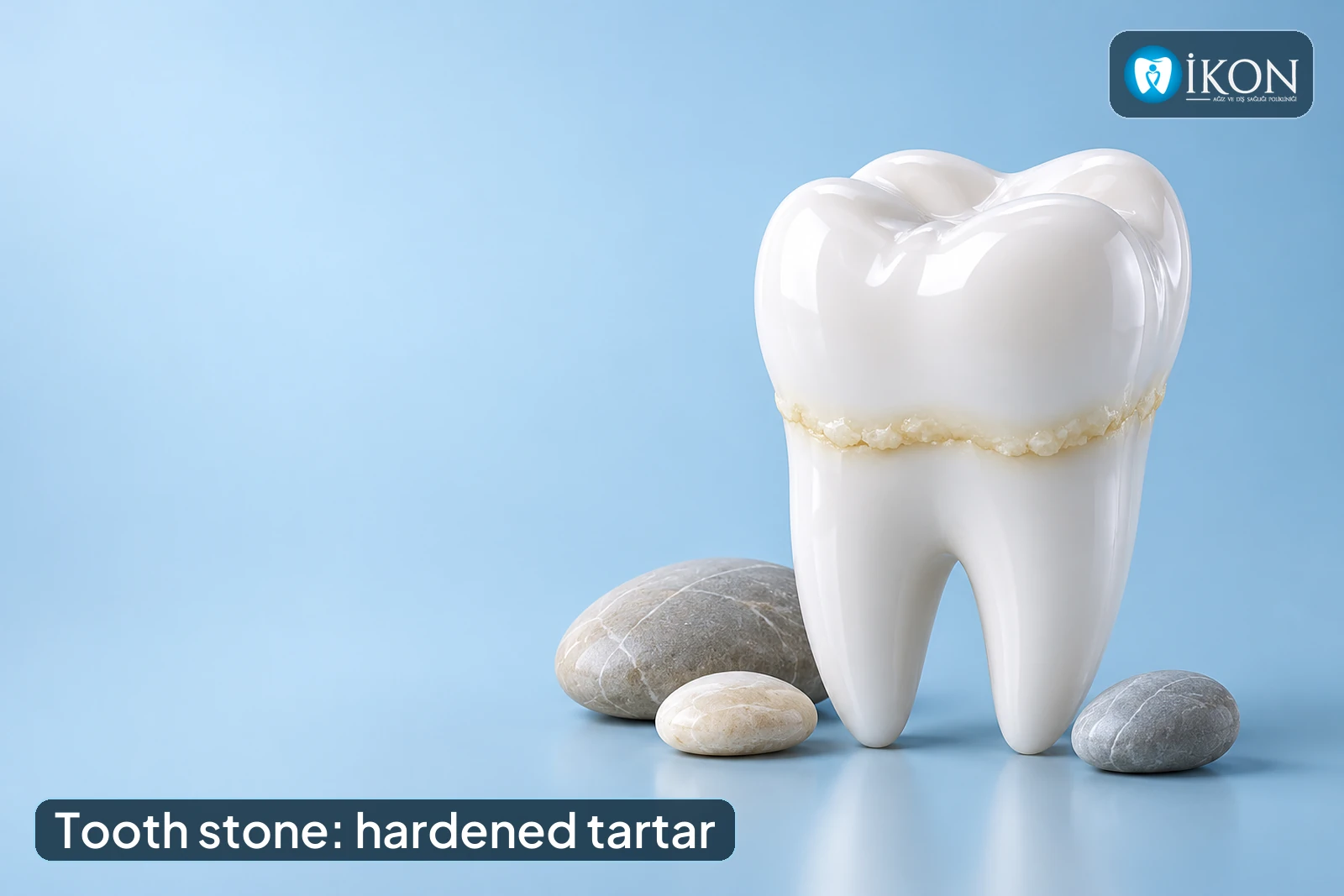
Tartar, which dentists call dental calculus, is plaque that has hardened. Plaque is the soft, sticky film of bacteria that builds up on your teeth every day. If it is left in place, minerals from your saliva and from the fluid around your gums gradually soak into it and turn it into a hard crust that stays attached to the tooth.[1]
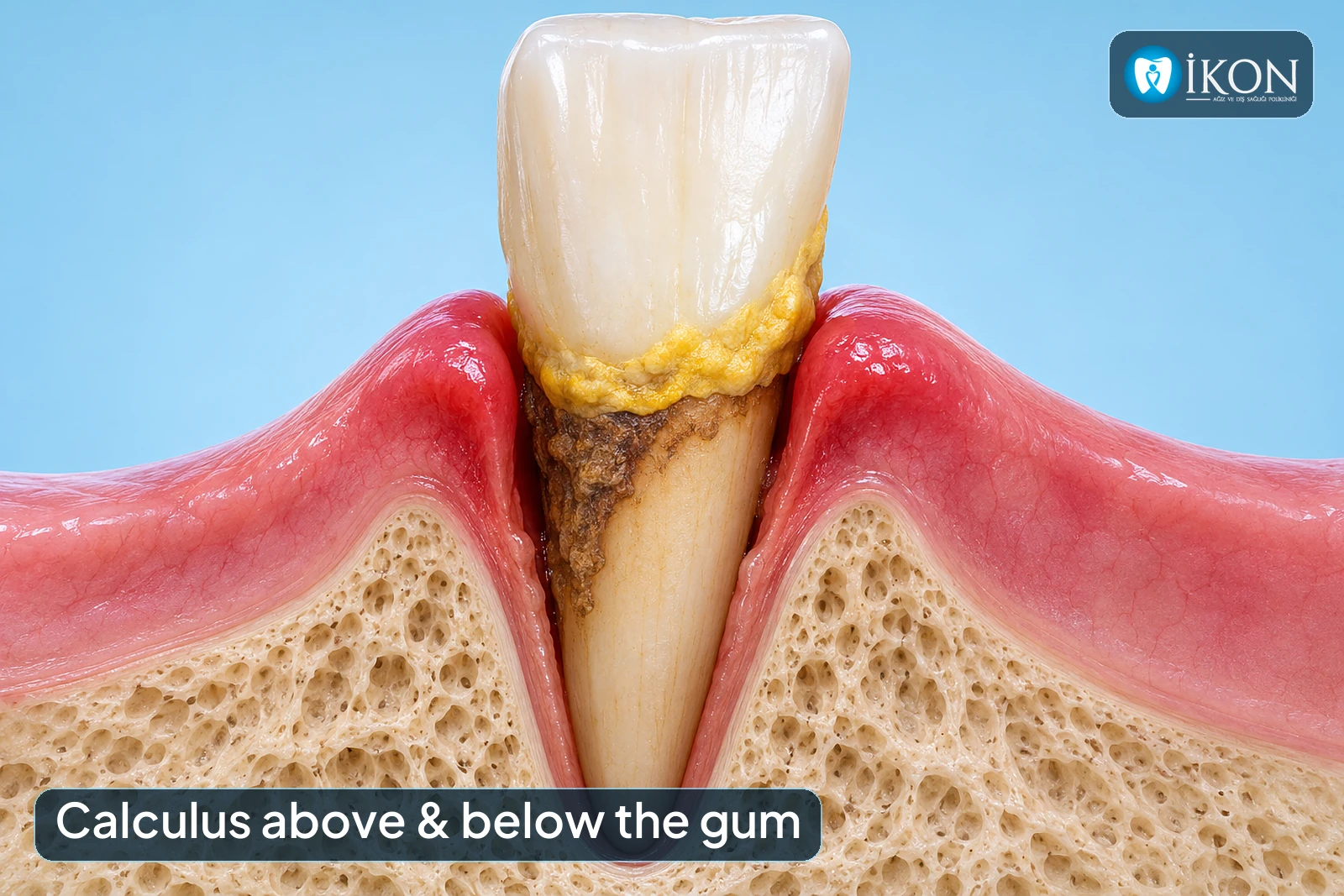
It can form above the gumline, where you can see it, or below it, on the root surface. The visible kind (supragingival) is roughly 40 to 60 percent mineral. The kind under the gum (subgingival) is harder to see and harder to reach, which is why it usually needs specialist instruments.[1]
It does not take long. Plaque can begin to harden within days to a couple of weeks, and people differ in how quickly they form it.
Is tartar the same as plaque?
No. Plaque is soft, and it can be brushed away if you do it properly and often enough. Tartar is hard and stuck on. The practical difference is that you can control plaque at home, and you cannot control tartar.
Does tartar itself damage the gums?
The harm comes mainly from the plaque bacteria living on and under the tartar. The NHS describes gum disease as being caused by plaque that is not removed by brushing.[2] Tartar gives that plaque somewhere to sit, which is why removing it matters, but it is the bacterial film that irritates the gum.
Why brushing cannot remove tartar
Once plaque has hardened, a toothbrush bristle slides over it. Public guidance from dental organisations such as the Oral Health Foundation and the American Dental Association says the same thing: tartar is removed by a dentist or hygienist, not by brushing.
Scrubbing harder is not the answer. You are pressing a soft brush against something hard, and the realistic result is sore gums rather than a clean tooth. The sensible goal at home is to stop plaque turning into tartar in the first place, which we cover in the prevention section below.
What does tartar-control toothpaste actually do?
It can slow the build-up of new tartar. It does not remove tartar that is already there. Think of it as a way to reduce how much the hygienist has to deal with, not as a replacement for the visit.
How to remove tartar: what works at home and what is unsafe
The honest answer is that established tartar cannot be safely removed at home. What you can do is remove the plaque before it hardens, and keep new tartar to a minimum between visits.
Dentists explain that the home methods people see online are the part to be careful with. Metal scrapers and picks can slip and cut the gum or scratch the tooth surface. Acidic or abrasive remedies, such as lemon juice, vinegar or neat baking soda, are not shown to dissolve tartar and may irritate gums and wear at the enamel instead.
What does work at home?
Brushing twice a day with fluoride toothpaste, cleaning between the teeth every day, and not smoking. Those habits will not dissolve existing tartar, but they cut the plaque supply that becomes tartar.[2]
Scale and polish: what the hygienist actually does
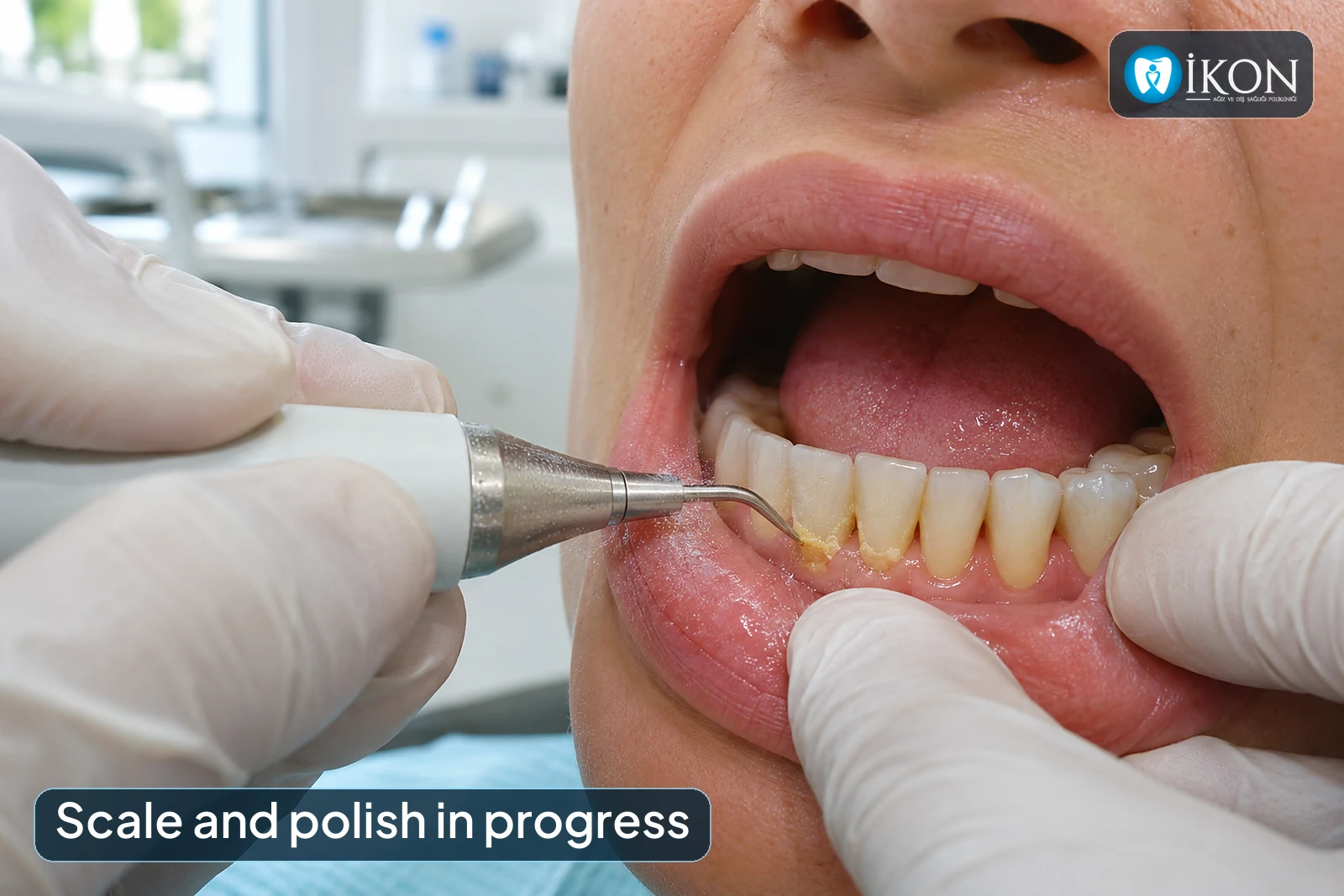
The NHS describes a scale and polish as a clean by a hygienist that removes plaque and tartar from your teeth.[5] In practice an appointment usually runs 30 to 45 minutes and follows a fairly standard order.
First comes scaling. The hygienist uses an ultrasonic scaler, a small instrument with a vibrating tip and a gentle water spray, while a suction tube clears the water. The vibration breaks the tartar off the tooth. Hand instruments then deal with finer or more stubborn areas, including just under the gumline.
Next comes polishing. A soft rubber cup or brush with polishing paste smooths the tooth surface and lifts light surface staining, which makes it harder for new plaque to cling. You rinse, and the hygienist checks the result and usually shows you where you are missing plaque when you brush.
What about air polishing for stains?
Some clinics offer air polishing, which uses a jet of fine powder and water to lift stains such as those from tea, coffee or smoking. It is usually an optional add-on rather than part of a standard appointment, so ask before you book.
Is a polish the same as whitening?
No. Polishing removes surface stain and can make teeth look brighter. It does not change the natural shade of the tooth the way whitening does.
See how we work
A clean mouth is the foundation for any cosmetic or orthodontic treatment. These are videos from our clinics in Istanbul.
Patient storiesOur patients talk about their new smile
Real patients, in their own videos. Tap a video to watch it. More patient videos →



Does it hurt, and is it harmful to your teeth?
For most people a clean feels odd rather than painful: vibration, water, a scraping sound. Sensitive teeth and exposed roots can make it uncomfortable, and if that is you, say so at the start. Numbing gel or a local anaesthetic can be offered, and the American Dental Association notes that deeper cleans may need anaesthetic.[6]
What does the Cochrane review say?
A 2018 Cochrane review looked at two randomised trials with 1,711 adults who did not have severe gum disease and attended regularly. Routine cleans every 6 or 12 months made little or no difference to gum inflammation, pocket depth or quality of life, and gave only a small reduction in tartar.[4] Harms were not reported. That is not evidence that cleaning is harmful. It also does not apply to people with gum disease or heavy tartar, who were not the group studied.
Does it wear away enamel?
Careful scaling is aimed at the deposits, not at healthy enamel. The information we found suggests that tooth surfaces that are already cracked, decayed or defective need extra care, which is one more reason to tell your hygienist about any problem teeth beforehand.
Why do I feel gaps between my teeth afterwards?
Dentists explain that heavy tartar can fill small spaces between teeth, and swollen gums can cover the necks of the teeth. Once the deposits are gone and the gums settle, those spaces become noticeable. The gaps were already there; you are seeing them for the first time.
Why are my teeth sensitive after a clean, and how long does it last?
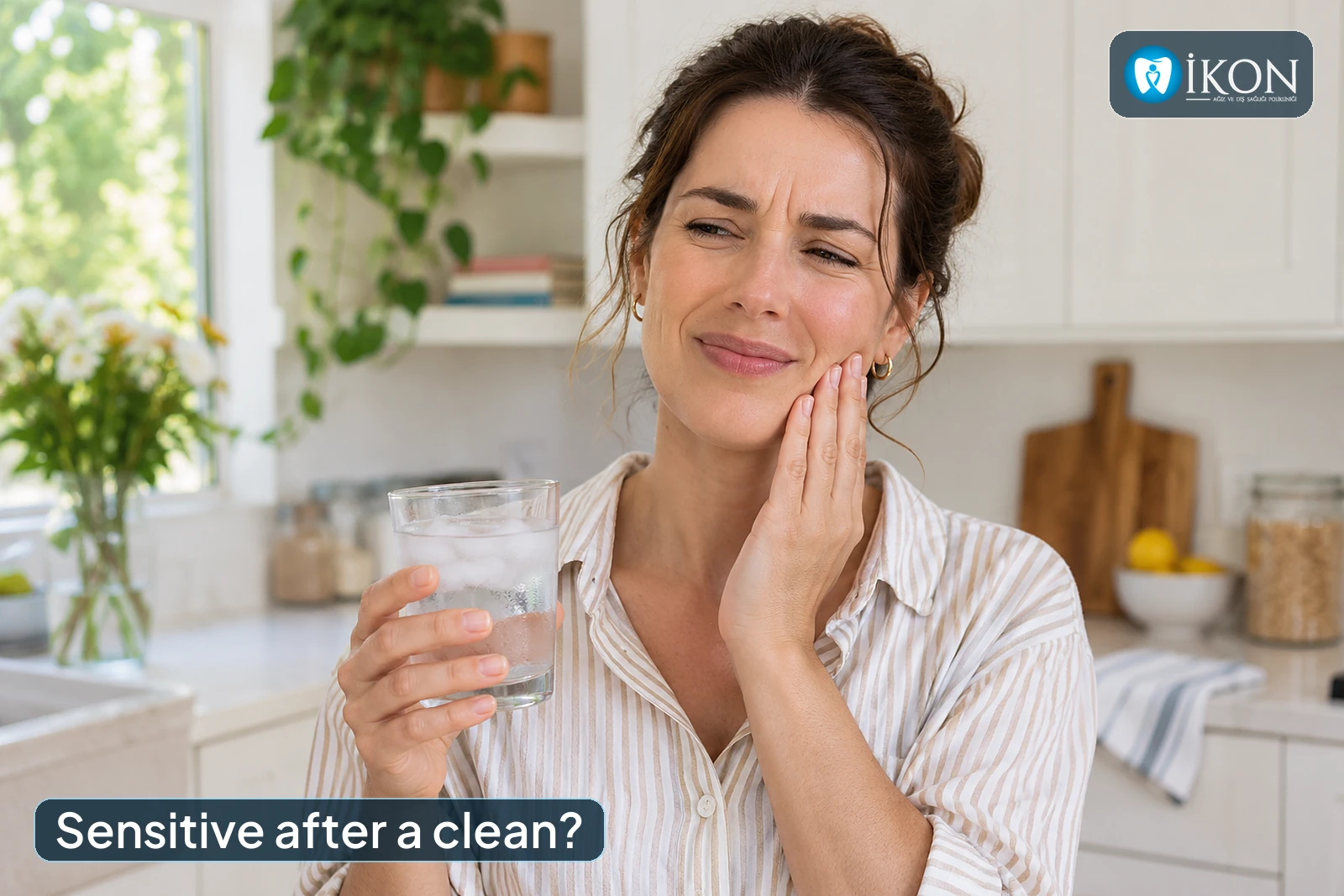
Tartar can cover exposed root surface, and removing it can leave the area temporarily more sensitive. After a routine clean this usually settles in a day or two. After a deep clean, the ADA says pain typically lasts one to two days and sensitivity can last up to a week.[6] A sensitive-teeth toothpaste and avoiding very hot, cold or acidic food for a day or two is the usual advice. If it is severe or lasts longer, call your dentist.
How often should you get your teeth cleaned?
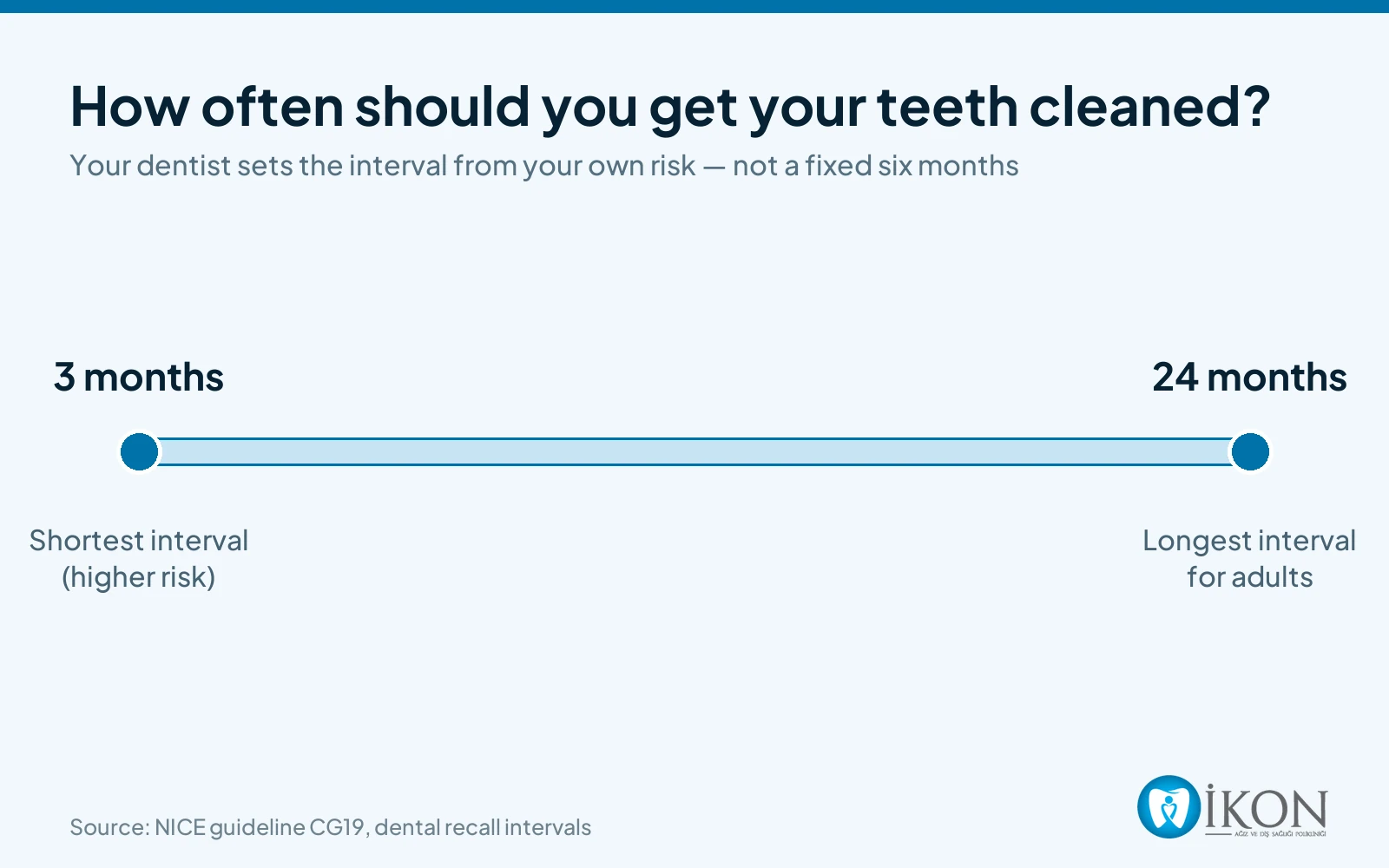
There is no single right answer, and the old rule of every six months is not a rule at all. NICE guidance says the gap between dental check-ups should be set by your individual risk of disease, anywhere from 3 months to 24 months for adults.[3] The NHS advice is simply to see a dentist if you have not had a check-up in the last two years.
That matches the Cochrane finding above: for adults with healthy gums and little tartar, doing a clean on a fixed timetable made little difference.[4] Someone who builds tartar quickly, or who has gum disease, is a different case.
Who might need to come more often?
Dentists explain that people who form tartar quickly, have gum disease, or find it hard to keep plaque off their teeth are the ones most likely to be advised to come every three to four months. Your dentist or hygienist can tell you which group you are in after looking at your gums.
Deep clean or routine clean: what is the difference?
A routine clean deals with deposits on the visible part of the tooth and just below the gumline. A deep clean is a different treatment: it cleans the root surfaces below the gumline, where bacteria and tartar have collected in pockets around the teeth. The ADA describes it as treatment for gum disease and says it may take several visits and may need local anaesthetic.[6]
UK periodontal guidance from the British Society of Periodontology describes this deeper cleaning as the next step for pockets of around 4 mm or more. Your dentist will usually measure the gum pockets with a small probe before recommending it.
How do I know which one I need?
Bleeding gums, persistent bad breath, gums that look swollen or are pulling back, and loose teeth are all on the NHS list of gum disease symptoms.[2] A routine clean is for a healthy mouth. If your gums are inflamed or you have pockets, your dentist will probably suggest the deeper option first.
What a hygiene visit costs in the UK, and at İkon
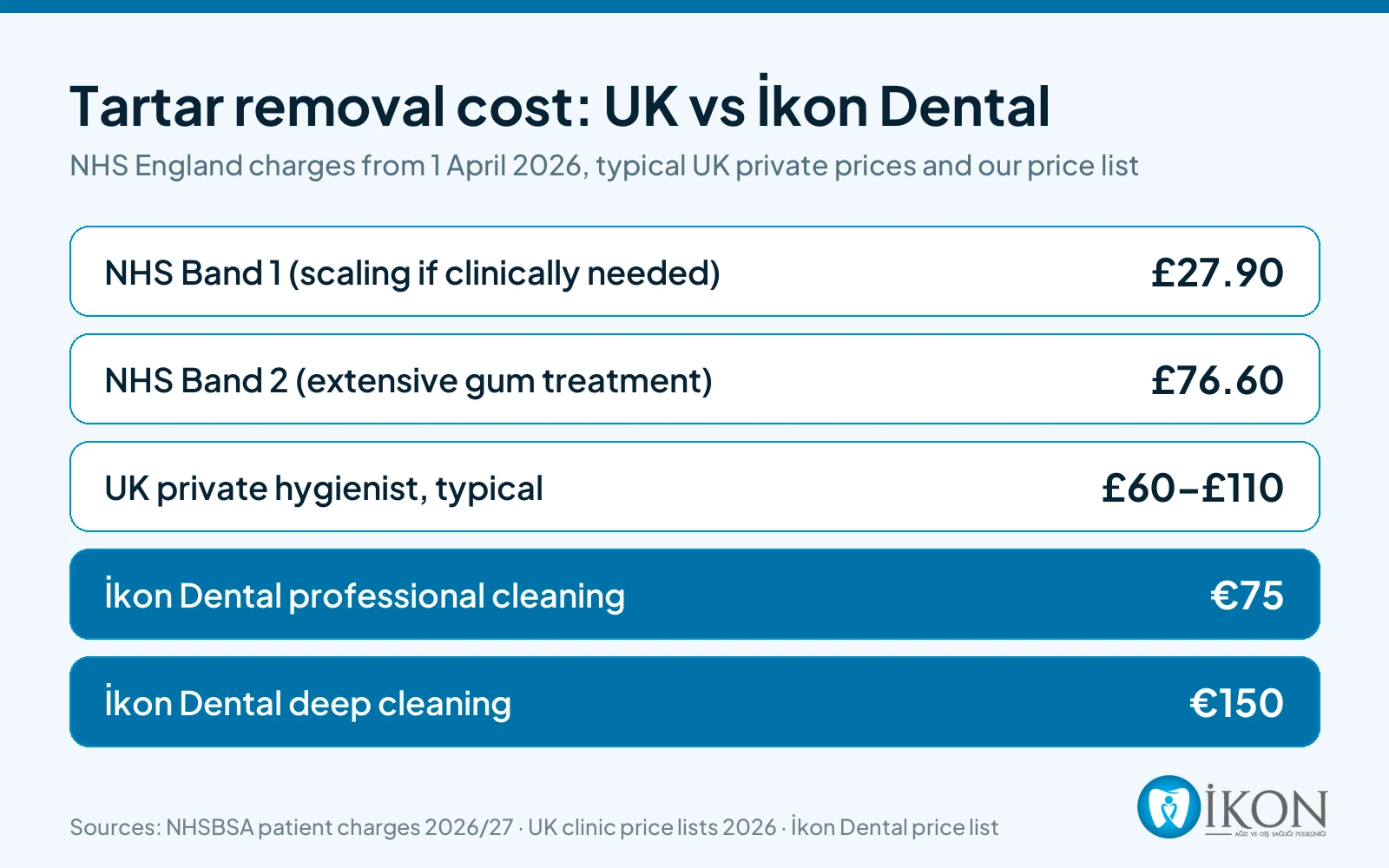
In England the NHS charges in three bands. From 1 April 2026 they are £27.90 for Band 1, £76.60 for Band 2 and £332.10 for Band 3 (up from £27.40, £75.30 and £326.70 in 2025/26).[7] A scale is usually part of Band 1 when it is clinically needed. Extensive gum treatment can fall into Band 2. A clean done purely for appearance, with no clinical need, is private.[8] These figures are for England only.
Privately, published price lists vary. One London clinic lists £85 for 30 minutes and £135 for 45 minutes, with air polishing about £30 extra. A clinic in Blackpool lists from £84. As a rough guide, typical UK private prices run from about £60 to £110, with London higher.
At İkon Dental in Istanbul, professional cleaning and scaling costs €75 and a deep clean costs €150. Check the exchange rate on the day you book, because the pound price moves with it.
Is it worth travelling just for a clean?
Honestly, no. The saving on a single hygiene visit will not cover flights and accommodation. A clean makes sense as part of a trip you are already making for treatment.
Keeping tartar away between visits
You cannot remove tartar yourself, but you can make it form more slowly. The NHS basics are the ones that matter: brush twice a day for two minutes with fluoride toothpaste, spit out the excess afterwards instead of rinsing with water, clean between the teeth every day, and do not smoke.[2] Keep up regular check-ups at the interval your dentist advises.
Cleaning between the teeth is the step most people skip, and it is where plaque is most likely to survive.
Powered toothbrushes are modestly better than manual ones at reducing plaque and gum inflammation, according to a Cochrane review.[9] If you find manual brushing hard to do thoroughly, one is worth trying.
Why is tartar called tooth stone?
If you have searched for "tooth stone", this is where the name comes from. It is not a medical term in English. It is a literal translation of what many other languages call tartar: diş taşı in Turkish, Zahnstein in German and зубной камень in Russian. The English clinical word, calculus, comes from the Latin for a small stone, so the idea is the same.
In some places the same words are used for tooth gems or tooth jewellery, which are a different thing entirely. If you are looking for advice on hardened deposits on your teeth, tartar or calculus are the terms that will get you reliable results.
Common myths about cleaning, tartar and your teeth
Few areas of dental care attract as many half-truths as hygiene visits. Here is how common claims stand against what we could verify.
| Claim | Verdict | What we found |
|---|---|---|
| Brushing harder will remove tartar. | False | Tartar is hard and bonded to the tooth. Only a dentist or hygienist can remove it, and tartar-control toothpaste only slows new build-up.[1] |
| A scale and polish wears away your enamel. | False | Careful scaling is aimed at deposits rather than sound enamel. Teeth that are already cracked or decayed need extra care, so tell your hygienist about them. |
| Gaps appear between my teeth after a clean. | True | Dentists explain that tartar and swollen gums can hide small spaces. Once the deposits are gone and the gums settle, the spaces show. The gaps were already there. |
| Cleaning loosens healthy teeth. | Unproven | We found no evidence that a clean loosens healthy teeth. Loose teeth are listed by the NHS as a symptom of gum disease, which is a reason to see a dentist.[2] |
| Everyone needs a clean every six months. | False | NICE sets the interval by individual risk, from 3 to 24 months, and the Cochrane review found routine cleans on a fixed timetable made little or no difference in adults without severe gum disease.[3][4] |
| Tartar itself is what causes gum disease. | Unproven | The NHS says gum disease is caused by plaque that is not removed. Tartar gives that plaque a place to sit, but the bacterial film does the damage.[2] |
| Lemon juice or vinegar will dissolve tartar. | Unproven | No evidence supports it, and dentists warn that acids can irritate gums and wear at enamel. |
What a dentist wants you to know
We are not diagnosing anyone here. These are points that dentists commonly raise with patients who ask about tartar and cleaning.
Tartar and braces or aligners
Dentists explain that fixed braces give plaque many more places to collect, so cleaning around them takes more effort. Many orthodontists recommend a clean before treatment starts and hygiene visits during it. Clear aligners come out for cleaning, which makes the daily routine easier, but they work best on teeth that are already clean.
Clean first, then cosmetic work
Before whitening, bonding or veneers, the teeth should be free of tartar and the gums healthy. Deposits can get in the way of a good result, and inflamed gums are harder to work around. A clean is often the first appointment in a treatment plan.
Tell us what is sensitive
Sensitivity is usually manageable. Numbing gel, a gentler technique or an anaesthetic can all be offered, but only if the hygienist knows. Mention sensitive teeth, receding gums and any past reactions before you start.
Think of it as maintenance
A clean does not fix the cause of tartar; your daily routine does. The visit resets the teeth, and what you do between visits determines how quickly you need the next one. Your dentist can tell you what interval suits you.
Questions about tartar removal
Does teeth cleaning damage enamel?
Careful cleaning is aimed at the deposits, not at healthy enamel. Teeth that are already cracked, decayed or defective need extra care, so tell your hygienist about any problem teeth before you start.
Can teeth cleaning loosen teeth?
We found no evidence that cleaning loosens healthy teeth. Teeth that feel loose are more often a sign of gum disease, so see a dentist if yours do.
Is teeth cleaning bad for your teeth?
No evidence shows that it is. The Cochrane review did not find harm, although it did not report on harms in detail. For people with healthy gums, routine cleans may add little, and the right interval depends on your own risk.
Can I remove tartar myself at home?
Not safely. Established tartar is bonded to the tooth and needs professional instruments. Scrapers and acidic home remedies risk damaging gums and enamel. What you can do is prevent plaque from hardening.
Does a hygienist clean hurt?
Usually not. It can feel odd, and sensitive teeth or exposed roots can make it uncomfortable. Numbing gel or local anaesthetic can be offered, so tell the hygienist at the start.
How long does a hygiene appointment take?
Usually 30 to 45 minutes. A deep clean for gum disease can take longer and may be split over several visits.
How much does tartar removal cost in the UK?
On the NHS in England, a scale is usually Band 1, which is £27.90 from April 2026, when it is clinically needed. Privately, typical prices run from about £60 to £110, with London higher. At İkon Dental, cleaning and scaling is €75 and a deep clean is €150.
Does the NHS cover tartar removal?
In England, yes, when it is clinically needed, usually in Band 1. A clean done purely for cosmetic reasons is private.
How quickly does tartar come back?
Plaque can begin to harden within days to a couple of weeks. How fast it returns varies from person to person, and good daily plaque control slows it down.
What is the difference between plaque and tartar?
Plaque is a soft film of bacteria that you can brush away. Tartar is plaque that has hardened with minerals from saliva, and only a dentist or hygienist can remove it.
Keep readingMore from our blog



Sources
- Critical Reviews in Oral Biology & Medicine (PubMed), "Jin Y, Yip HK. Supragingival calculus: formation and control", 2002.
- NHS, "Gum disease", Accessed 12 Nov 2026.
- NICE, "Dental recall: recall interval between routine dental examinations (CG19)", Accessed 12 Nov 2026.
- Cochrane Database of Systematic Reviews, "Lamont T et al. Routine scale and polish for periodontal health in adults", 2018.
- NHS, "Dental treatments", Accessed 12 Nov 2026.
- American Dental Association (MouthHealthy), "Scaling and root planing", Accessed 12 Nov 2026.
- NHS Business Services Authority, "NHS dental charges in England", From 1 Apr 2026.
- NHS, "How much will I pay for NHS dental treatment?", Accessed 12 Nov 2026.
- Cochrane Database of Systematic Reviews (PubMed), "Yaacob M et al. Powered versus manual toothbrushing for oral health", 2014.
This article is general information, not a diagnosis or personal medical advice. Images are illustrations or İkon Dental graphics. Results, sensitivity and costs vary from person to person, so please see a dentist for advice about your own teeth.

Your journey starts here
Your next chapter
begins with a conversation.
Tell us what you would like to change. We reply with options, the days you would need in Istanbul and a price range. Free, and with no obligation.
- WhatsAppMessage us on WhatsApp
- Call+90 546 690 88 10
- Emailinfo@ikondis.com